+0.26%
+0.20%
-2.74%
-0.64%
+0.55%
-0.84%
SEC Opens a Narrow Door for Tokenized Stocks
The SEC issued an Innovation Exemption order providing temporary, conditional relief for trading tokenized national market system (NMS) stocks. It specifically targets automated market makers and liquidity pools operating on public, permissionless distributed ledgers.
The exemption creates two parallel five year frameworks running from September 17, 2026 until September 17, 2031. One exempts tokenized securities venues (TSVs) from the definition of an exchange. The other exempts qualifying proprietary liquidity providers from being classified as dealers.
The Fine Print Is Strict
Getting this exemption means accepting a long list of conditions. Smart contracts must be auditable and public. The TSV itself has to be a U.S. person. Operators must give detailed public notice 30 days before launch, and transaction data has to be freely available within 10 minutes of execution.
TSVs are also required to maintain extensive records and consent to SEC examination at any time. Perhaps most notably, issuers of the underlying NMS stocks retain veto power over whether their shares get tokenized at all.
Volume Caps Keep Things Small
Trading on TSVs is boxed in by strict symbol and volume limits. Tier 1 stocks, meaning S&P 500 and Russell 1000 names, are capped at 75 symbols and 0.25 percent of average daily share volume. Tier 2 stocks get a bit more room: 250 symbols and 2.5 percent of volume.
- Affiliated TSV activity must be aggregated, not reported separately
- Repeated volume breaches trigger an automatic three month trading pause on the affected stock
- The caps exist specifically to limit manipulation risk while the framework is tested
CFTC Moves on Wallets and Front End Software
Separately, CFTC staff expanded no action relief for passive software providers enabling trading in CFTC regulated derivatives. The relief covers developing and distributing front end software, including self custodial crypto wallets, without triggering registration requirements meant for brokers.
This builds on a similar no action position the CFTC granted to Phantom Technologies Inc. on March 17, 2026, and is meant to clarify when a software provider crosses the line into acting as an introducing broker or associated person.
Why Agencies Are Moving Without Congress
Both actions follow the Senate’s failed cloture vote on the Digital Asset Market Clarity Act, a bipartisan bill that sought a comprehensive federal framework for digital assets. With that effort stalled, the SEC’s move continues its Project Crypto initiative, launched in July 2025 under Chairman Paul S. Atkins.
The SEC has acknowledged that existing market structure rules weren’t built for AMM liquidity pool models. The agency is treating this limited exemption as a live test, a way to evaluate blockchain based trading before deciding whether broader rule changes are justified.
Hashlytics Take
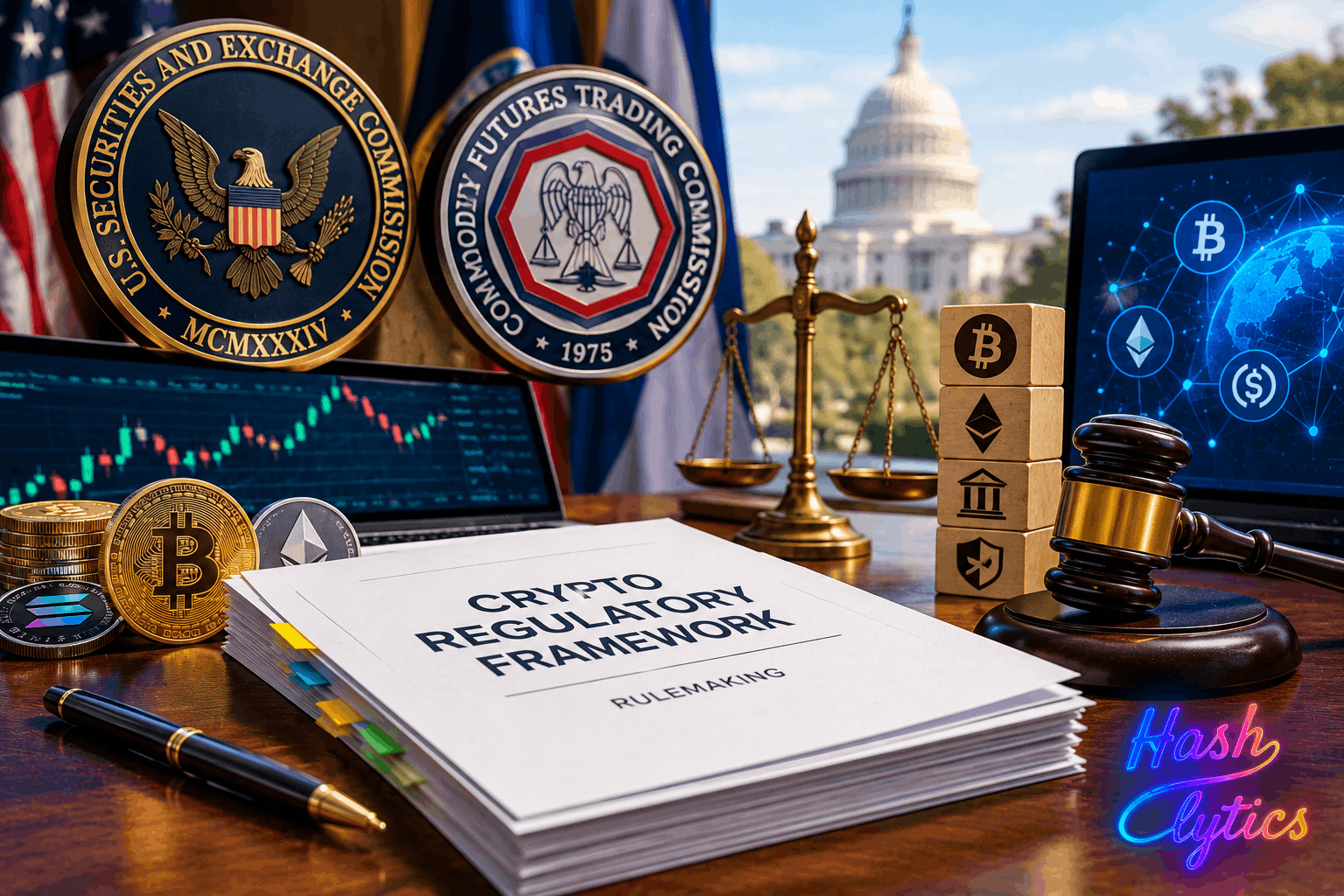
The real story isn’t the exemption itself, it’s what it reveals about how crypto regulation actually gets made in the U.S. right now. Congress couldn’t pass comprehensive legislation, so the SEC built a five year sandbox with volume caps, issuer veto rights, and automatic trading pauses instead. That’s not regulatory clarity, it’s regulatory caution dressed up as progress. Expect more of this pattern: narrow, reversible, heavily conditioned exemptions from agencies working around a legislature that can’t agree on crypto, rather than one comprehensive framework everyone can build against.
Follow Hashlytics on Bluesky, Facebook, LinkedIn , Telegram and X to Get Instant Updates