+0.67%
+0.03%
-0.14%
+1.10%
+4.54%
-0.31%
The bill would have empowered the Polish Financial Supervision Authority (KNF) to oversee the digital asset market directly, including the power to impose fines, block accounts, and halt transactions.
The Vote Fell 25 Short
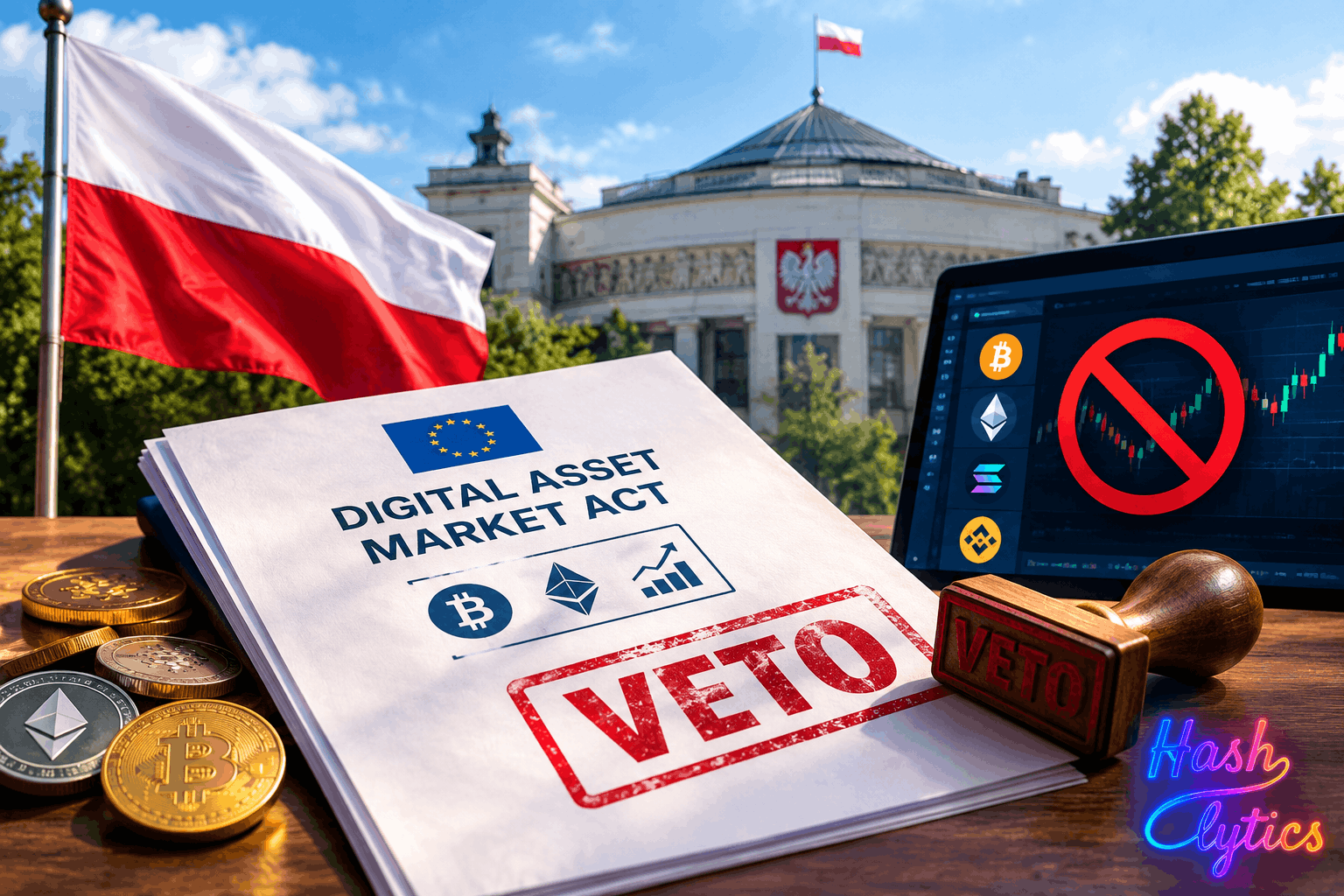
The override attempt took place on September 5, as reported by Cointelegraph. Of the 442 lawmakers present, 241 voted to override the presidential veto while 198 voted against and three abstained. Overriding a presidential veto in Poland requires three fifths of those present, or 266 votes in this case, so the effort fell short by 25 votes.
Nawrocki’s Third Rejection
This marks the third time President Nawrocki has vetoed the bill, having rejected it once already back in June. His argument has stayed consistent throughout: the proposed legislation risks overregulating the digital asset industry to the point where Polish companies start relocating abroad.
Nawrocki isn’t opposed to regulation itself. He has said he agrees Poland needs a framework in place, but insists the current version is too restrictive and needs revision before he’ll sign off on it.
What This Delay Costs Poland
MiCA exists to standardize crypto regulation across the European Union, giving businesses legal clarity and giving consumers protection they can actually rely on. Every EU member state is expected to implement it, and most already have.
Poland’s continued delay means the country is now operating without the regulatory clarity its neighbors have already secured. That leaves Polish digital asset businesses without a clear compliance path, and leaves investors guessing about what rules will eventually apply.
Hashlytics Take
Three vetoes in, this has stopped being a debate about regulatory philosophy and started being a genuine competitive liability. While Poland argues internally about how strict its crypto rules should be, companies operating there are making real decisions about whether to stay. MiCA was designed to give the EU a unified market, and every month Poland sits outside that framework is a month its crypto sector falls further behind jurisdictions that already have certainty. Nawrocki may get the revisions he wants eventually, but the cost of getting there is being paid by Polish firms right now.
Follow Hashlytics on Bluesky, Facebook, LinkedIn , Telegram and X to Get Instant Updates