+1.04%
+0.60%
+0.00%
+0.05%
+6.04%
+0.88%
Committee Approves Revised Legislation
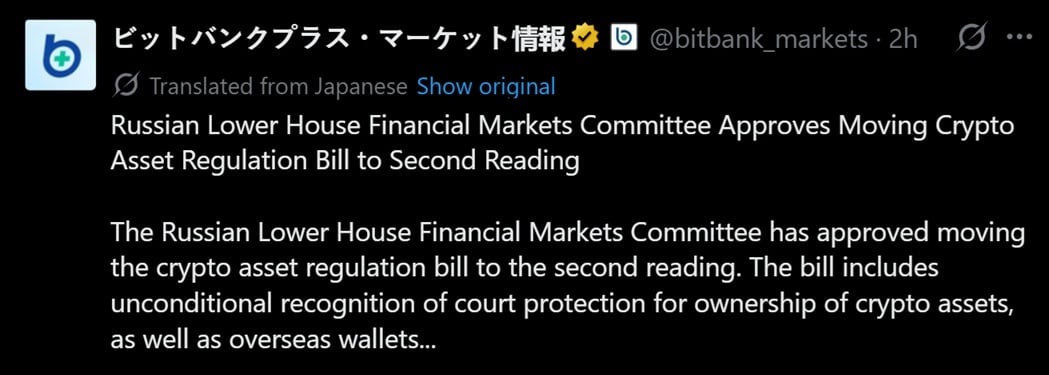
The parliamentary Committee on Financial Markets, led by lawmaker Anatoly Aksakov, formally endorsed the revised digital currency bill. This approval advances the legislation, known as Bill No. 1194918-8, towards its second reading in the State Duma. Second and third readings are tentatively scheduled for July 21, with the law expected to enter into force on September 1.
What Changed in the Final Version
The most significant amendment removes the requirement for crypto wallet addresses to be reported. Under the updated text, holders will only need to declare their digital asset balances and transaction flows. This adjustment follows months of advocacy from lawmakers and industry groups, who argued the original provisions were too intrusive.
The revised bill also explicitly legalizes the purchase of digital currencies. Earlier drafts left this right ambiguous, creating uncertainty for retail investors. Additional amendments include:
- Digital currencies and stablecoins will be recognized as monetary assets for buying and selling
- Use of crypto for domestic payments remains prohibited
- Retail investors limited to Bitcoin, Ether, and USDT stablecoin
- Annual purchase cap of 300,000 rubles (less than $4,000) starting in 2026
- Mandatory risk testing required before trading begins
Lawmakers continue to advocate for allowing withdrawals to non-custodial wallets, a feature currently not permitted by the legislation.
Russia’s Broader Digital Strategy
The crypto bill doesn’t exist in isolation. Russia is simultaneously advancing its digital ruble project, a CBDC developed by the Bank of Russia. The central bank confirmed a September 1 rollout for the digital ruble, with Governor Elvira Nabiullina stating that everything is ready
.
| Initiative | Details | Launch Date |
|---|---|---|
| Crypto Bill | Framework for trading and storing digital assets | September 1 |
| Digital Ruble | CBDC with 12 pilot banks connected | September 1 |
| Retail Mandate | Retailers with 120M+ rubles annual revenue must accept digital ruble | September 1 |
Context: Sanctions and Financial Independence
These parallel developments reflect Moscow’s strategy to modernize its financial systems under pressure from Western sanctions. Legalized and supervised crypto trading could provide a channel for external settlements, particularly as traditional payment networks remain restricted. The digital ruble, meanwhile, aims to enhance the central bank’s control over domestic money flows.
So far, public demand for the digital ruble has been weak, though that could change once mandatory acceptance begins.
Timeline and Next Steps
The legislative process moves quickly from here. The second and third readings are tentatively set for July 21, with final passage expected before the September 1 implementation deadline. Markets will be watching closely for any last-minute amendments or delays.
Follow Hashlytics on Bluesky, LinkedIn , Telegram and X to Get Instant Updates