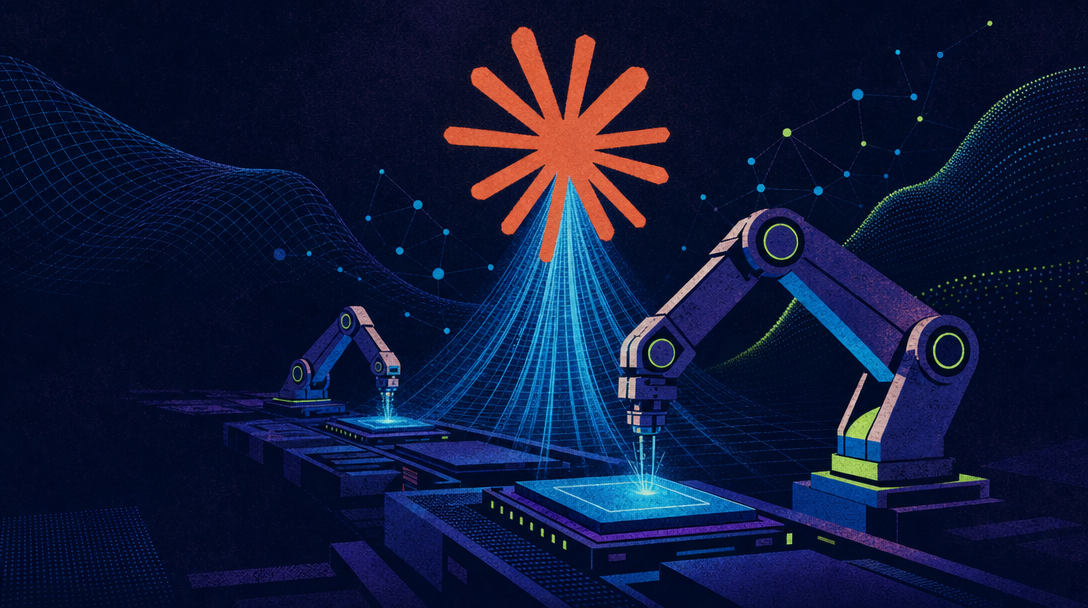
In a significant move that underscores the fierce competition for AI infrastructure talent, Clive Chan, a key hardware engineer from OpenAI, has jumped to rival Anthropic. The high-profile departure comes as both companies race toward initial public offerings and accelerate efforts in custom chip development.
Who Is Clive Chan?
Chan identified himself as OpenAI’s second hardware employee in its custom chip program when he announced the move on June 7, 2026. At OpenAI, he was instrumental in building custom chips from the ground up and played a pivotal role in the strategic partnership between OpenAI and Broadcom, a collaboration that reportedly faced challenges around production costs and creditworthiness.
Before OpenAI, Chan spent roughly two and a half years at Tesla’s Autopilot division, where he worked on custom chips for machine learning training, including software framework development and datacenter co-design. He joined OpenAI in January 2024.
What Will Chan Do at Anthropic?
Anthropic’s specific plans for Chan remain somewhat opaque. His new title at Anthropic, perplexity per picojoule
, hints at his focus: maximizing model performance per unit of energy consumed.
Perplexity measures how well a language model predicts text. A picojoule is an extremely small unit of energy. Together, the title suggests Chan’s work could involve either optimizing software for existing GPUs and TPUs, or designing custom silicon tailored specifically to Anthropic’s Claude models.
Anthropic’s Custom Chip Ambitions
According to Reuters, Anthropic has been exploring the design of its own AI chips, following similar moves by OpenAI and Meta. As of April 2026, these plans were still in early stages with no dedicated team yet assembled.
Chan’s arrival could dramatically accelerate that timeline. His experience building chips at OpenAI and his work at Tesla gives him a rare skill set in the still-small world of AI chip engineering.
The Financial Incentive
Currently, Anthropic relies on Google’s TPUs and Amazon chips to power its Claude models. The company recently locked in a long-term deal with Google and Broadcom, committing to a $50 billion investment in US computing infrastructure.
But building proprietary chips could offer a major financial advantage. Custom silicon would let Anthropic dramatically improve margins on inference tasks over time, reducing dependence on third-party chip suppliers. This shift reflects a broader trend in the AI industry, which is rapidly transitioning from a research-breakthrough narrative to an infrastructure-driven sector where owning your own silicon increasingly matters.
Chan’s departure signals how seriously Anthropic is about building chip expertise in-house. As both Anthropic and OpenAI prepare for public markets, the race for custom silicon has become a critical competitive battleground. Having someone who helped pioneer OpenAI’s chip program now on your team is a major advantage in that race.
Whether Anthropic can execute on custom chip development remains to be seen. But with Chan on board, the company now has the talent to at least try.
Follow us on Bluesky , LinkedIn , and X to Get Instant Updates