+3.06%
+2.11%
-3.50%
-2.89%
-6.09%
+11.51%
The July 4 Deadline Passed Without a Vote
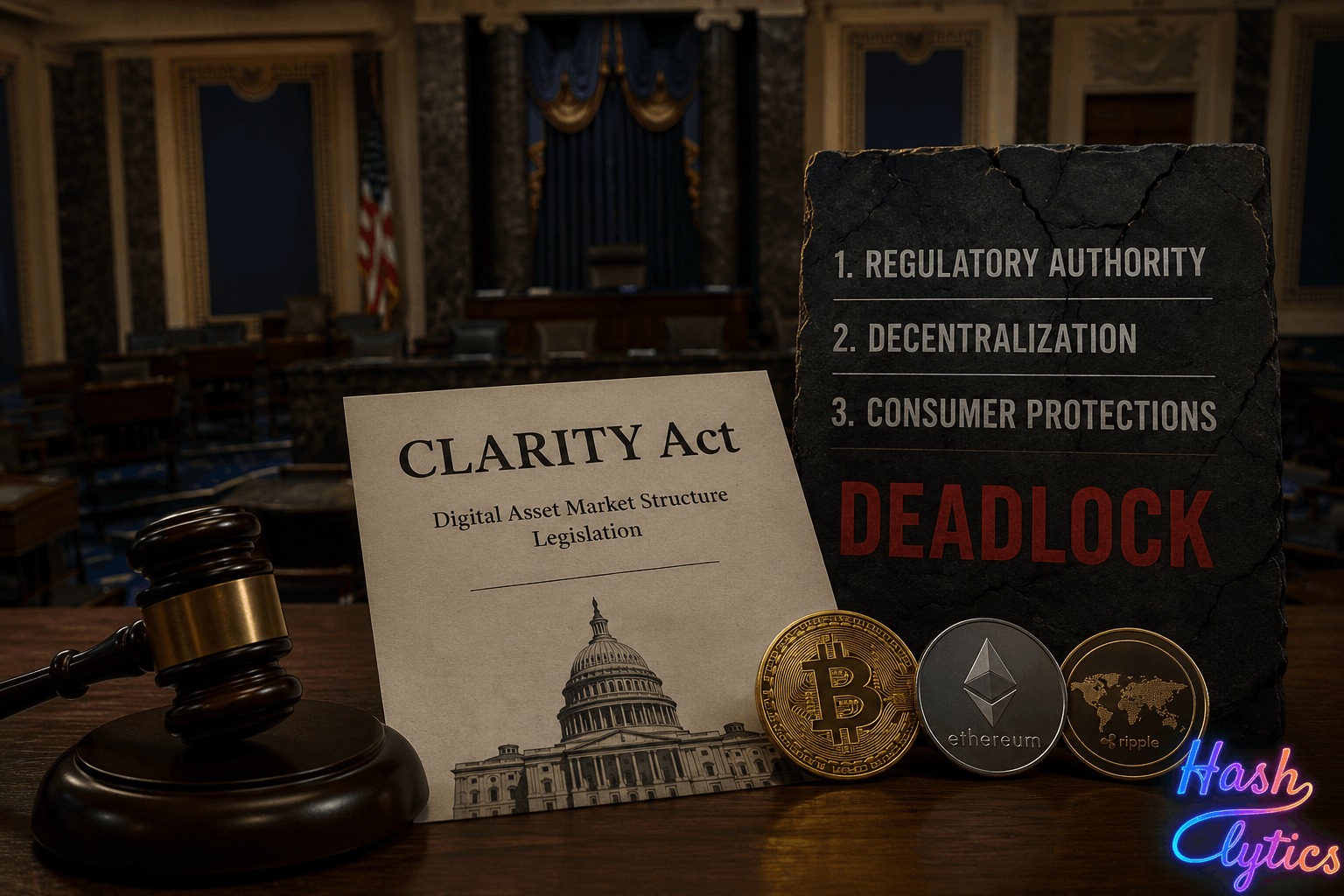
The CLARITY Act failed to receive a Senate vote by its July 4 target date. No cloture motion was filed, indicating insufficient support to overcome the 60-vote filibuster threshold. The Senate returns on July 13, leaving only a tight window before the August recess closes off legislative opportunities for the remainder of 2026. Many analysts view this as the last realistic chance for meaningful crypto regulation this cycle.
House Passed It. Senate Refuses to Move It.
The contrast is stark. The bill passed the House on July 17, 2025, with solid bipartisan support: 294 yes, 134 no. Over 70 Democrats backed it alongside Republicans, a rarity on crypto policy. The Senate Banking Committee also advanced it favorably in May 2026 with a 15 to 9 vote.
But the full Senate is a different story. Only two Democratic senators currently support the bill, both with conditions attached. Republicans hold 53 seats, but two GOP senators are expected to oppose it. That math doesn’t work in an evenly divided chamber where 60 votes are needed to overcome a filibuster.
Three Issues Are Blocking Everything
1. Public Officials and Crypto Holdings
The first dispute centers on ethics provisions regarding what public officials can own or earn from cryptocurrency. This became heated after disclosures revealed significant crypto-related income tied to President Donald Trump in 2025. Proposed amendments to address these ethics concerns failed in committee, partly because the White House opposed language that specifically targeted presidential holdings. Senators want clarity on the rules, but don’t want to appear to be singling out the sitting president.
2. Developer Exemptions and Law Enforcement Concerns
Section 604 of the bill incorporates elements of the Blockchain Regulatory Certainty Act, which would exempt non-custodial software developers from certain money-transmitter and BSA requirements. Law enforcement organizations worry this could complicate cryptocurrency-related criminal investigations. The White House Crypto Council has negotiated with these groups. One major national law enforcement organization has endorsed the bill, but disagreements persist on how to balance developer freedom with law enforcement access.
3. Stablecoin Yields and Revenue Models
The third sticking point involves how platforms can generate revenue from stablecoins, particularly USDC. Coinbase reportedly earns substantial annual revenue from USDC-related rewards programs. Banking industry representatives argue that parts of the CLARITY Act could allow digital asset platforms to offer interest-like returns outside the framework of the GENIUS Act, which was signed into law in July 2025. Banks worry this creates an unfair competitive advantage for crypto platforms.
Time Is Running Out Fast
The Senate’s limited floor time makes the CLARITY Act’s path even steeper. Leadership is also juggling reauthorization of FISA Section 702 and the annual National Defense Authorization Act. Each cloture motion under standard Senate procedure can consume several days. Meanwhile, the rulemaking deadline for the GENIUS Act coincides with the Senate’s return, adding another competing priority.
Unless the three disputes get resolved quickly, crypto regulation will likely wait until 2027. And in Washington, waiting usually means starting over.
Follow Hashlytics on Bluesky, LinkedIn, Telegram and X to Get Instant Updates