+1.04%
+0.60%
+0.00%
+0.05%
+6.04%
+0.88%
What MiCA Covers and Doesn’t
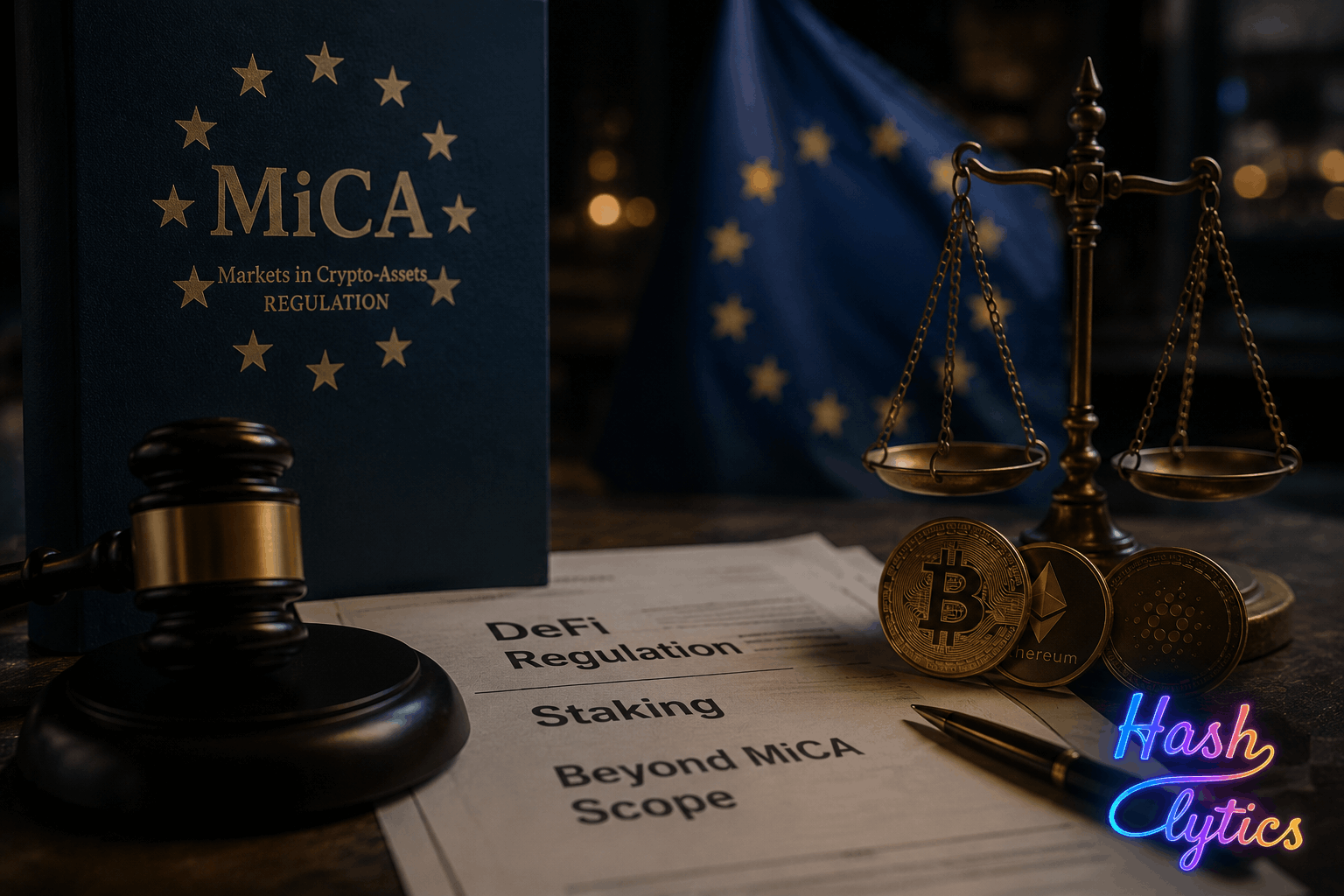
MiCA is a landmark regulation, but it has clear limitations. It primarily governs centralized crypto asset service providers and their interactions with consumers. What it does not extensively cover are the decentralized nature of DeFi protocols or the mechanisms of staking services.
This gap exists because MiCA was designed around traditional financial intermediaries. When transactions happen peer-to-peer across decentralized networks, the regulatory model breaks down. Lawmakers now recognize they need new rules to address this blind spot while protecting consumers, maintaining market integrity, and ensuring financial stability.
The Current Market Transition
The European crypto market is navigating the conclusion of MiCA’s transition period, which ends on July 1. Many firms are actively securing the necessary licenses to operate within the new regulatory environment.
Key example: FalconX successfully obtained its EU crypto license just two days before the transition deadline, illustrating both the urgency and the feasibility of compliance.
What’s Happening Elsewhere
Europe is not alone in refining its crypto rules. The global regulatory landscape shows a patchwork of different approaches.
- Kraken is integrating institutional liquidity into European banking rails via Trever, signaling continued institutional engagement despite evolving regulations.
- Binance re-entered the Philippines market after receiving clearance from the BlockShoals Sandbox, indicating a more accommodating regulatory stance in that region.
- Binance also faces a £150 million lawsuit in the UK from 1,692 retail derivatives traders, highlighting persistent legal challenges for major exchanges.
- UK’s FCA recently eased stablecoin rules following considerable industry backlash, showing regulators are responsive to market feedback.
What Comes Next
The renewed focus by EU lawmakers on DeFi and staking indicates a continuous evolution of crypto oversight within the bloc. These discussions highlight an ongoing effort to balance innovation with regulatory safeguards. The exact timelines and specific provisions for these expanded regulations remain under development, but the direction is clear: Europe is moving toward comprehensive oversight of previously unregulated corners of crypto markets.
For European crypto firms and participants, this means preparation and uncertainty will likely continue for months. The opportunity, though, is to shape regulations while they’re still being written.
Follow Hashlytics on Bluesky, LinkedIn, Telegram and X to Get Instant Updates