What’s Driving the Expansion
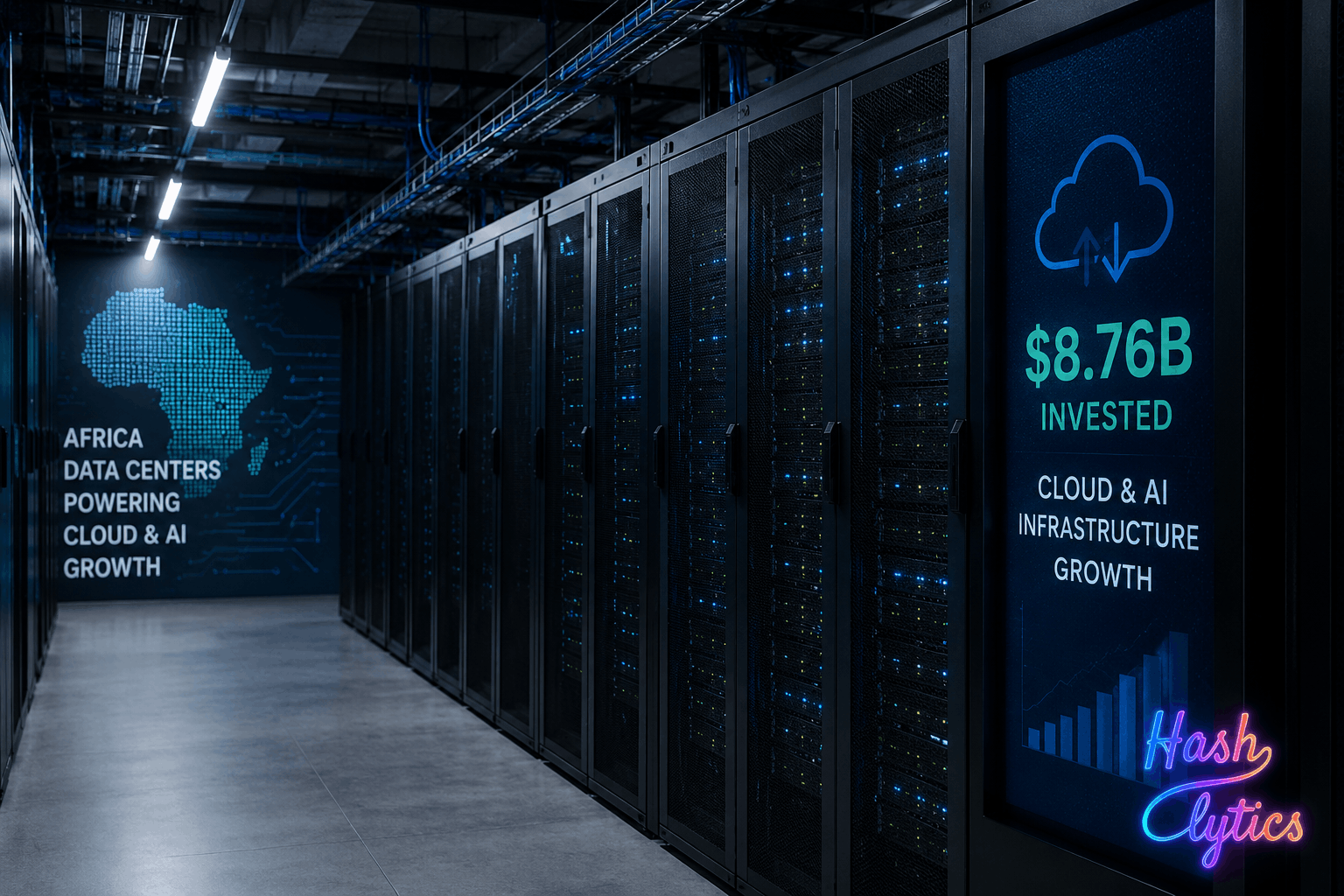
The growth stems from several converging trends. Improved connectivity infrastructure is making it feasible to build and operate data centers across more of the continent. Cloud adoption is accelerating as businesses move away from on-premise solutions. AI workloads are multiplying, requiring massive computational capacity. And critically, companies increasingly want data processed and stored locally rather than shipped overseas.
Investments in renewable energy are also crucial. Data centers consume enormous amounts of power, and Africa’s solar, wind, and hydropower resources provide both sustainability and cost advantages. Submarine cable infrastructure expansions are further supporting this growth, creating faster connections between African data centers and global markets.
The Investment Hubs
South Africa, Kenya, Nigeria, and Egypt remain the primary destinations for data center investment. These established markets benefit from mature telecommunications infrastructure and growing digital economies. Egypt stands out for cost effectiveness, with construction expenses running between $8 and $10 per watt, among the lowest globally.
But the investment map is expanding beyond these traditional hubs. North African countries like Morocco and Tunisia are attracting capital due to their proximity to Europe and extensive submarine cable networks. Emerging markets including Djibouti, Ethiopia, Ghana, Tanzania, Uganda, Mozambique, and Gabon are projected to attract a combined $1.36 billion by 2031. Major tech companies including Microsoft and Google have announced multi-billion-dollar commitments to African AI infrastructure, signaling confidence in the region’s future.
AI Reshapes Data Center Design
The data center facilities being built today look different from those of even five years ago. GPU-focused clusters are replacing traditional CPU-based architectures as companies deploy machine learning, big data analytics, and IoT applications. These AI workloads generate heat at unprecedented levels, forcing operators to rethink how they cool their facilities.
NVIDIA is planning an AI factory
in Kenya with 12,000 GPUs deployed over the next three to four years. Kenya’s Cloudoon Masinga Cloud facility already demonstrates what’s possible, utilizing water-cooling technology powered by hydroelectric and on-site solar generation. Advanced cooling solutions like liquid immersion cooling are becoming standard rather than optional.
Energy and Connectivity as Competitive Advantages
Africa’s abundant renewable resources are becoming a key differentiator. Teraco signed a wind power supply agreement in South Africa in 2025. Egypt is rapidly expanding its solar and wind capacity specifically to support data center growth. These investments ensure operators can maintain consistent power supply while controlling operating costs and meeting sustainability commitments.
Submarine cable networks form the backbone of this expansion. Egypt maintains 17 operational submarine cables with six more in development, connecting Africa to Europe, the Middle East, and Asia. Kenya is investing heavily in international connectivity infrastructure. The widespread cable outages across West Africa in 2024 underscored just how critical network redundancy and diversity have become for protecting digital infrastructure.
The Next Phase
Africa’s data center market is no longer a peripheral consideration for global tech companies. The combination of lower construction costs, abundant renewable energy, strategic geographic positioning, and growing local demand is reshaping how major cloud providers think about their infrastructure footprint. The $8.76 billion in projected investment is only the beginning of a much larger transformation.
Follow Hashlytics on Bluesky, LinkedIn, Telegram, and X to Get Instant Updates