When Verification Goes Live
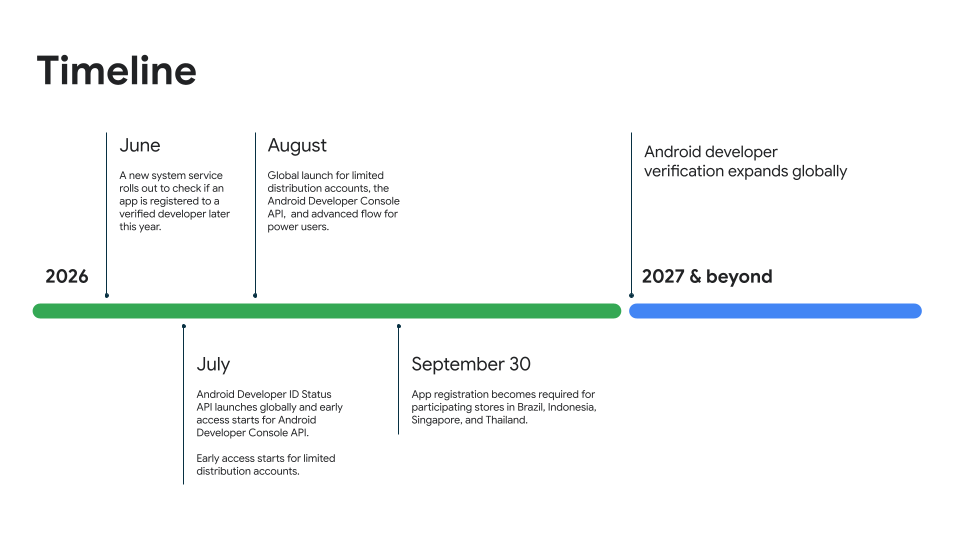
The developer verification system launches on . Initial deployment focuses on countries with high levels of app scams: Brazil, Indonesia, Singapore, and Thailand. According to Google’s Matthew Forsythe in a new blog post, developers who don’t register will find their apps cannot be sideloaded on Google-certified Android devices once verification is enforced in their region.
Why Google Is Tightening Security
Google originally pitched Android as an open alternative to Apple’s walled ecosystem. But the company announced last year it would begin erecting its own walls through developer verification. The driver is clear: a surge in scams that trick users into installing malware apps.
The shift has proven contentious within the developer community, with concerns about Google’s move away from openness toward centralized control.
Third-Party Stores and New Tools
Google is extending verification to trusted third-party app stores. Developers verified through these storefronts will also be recognized by Google. Participating stores include Honor (HONOR App Market), OPlus (OPPO App Market), Samsung (Galaxy Store), Transsion (Palm Store), vivo (V-Appstore), and Xiaomi (GetApps), alongside Google Play.
To streamline registration and management, Google is releasing two new APIs. The Android Developer ID Status API checks if a package name is registered, while the Android Developer Console API allows developers to register and manage app package names directly from development environments.
The Advanced Flow and Limited Distribution Option
This month, Google is deploying a new system service, com.google.android.verifier, on most certified Android 8 or higher devices. The package remains dormant until verification activates in a specific region.
In July, Google plans to release the new developer APIs and begin testing limited distribution accounts. These accounts, designed for hobbyists, require no fee or government ID and allow installation on up to 20 devices.
The advanced flow for bypassing verification becomes globally available in August. As detailed earlier this year, this process requires navigating a buried menu, multiple risk confirmations, and a 24-hour waiting period before installation can proceed.
Global Expansion Coming in 2027
Following the initial rollout in these four countries, Google plans to monitor the system’s performance and expand developer verification globally in 2027. The phased approach gives the company time to refine the process and address developer concerns before worldwide deployment.
Follow Hashlytics on Bluesky, LinkedIn, Telegram and X to Get Instant Updates