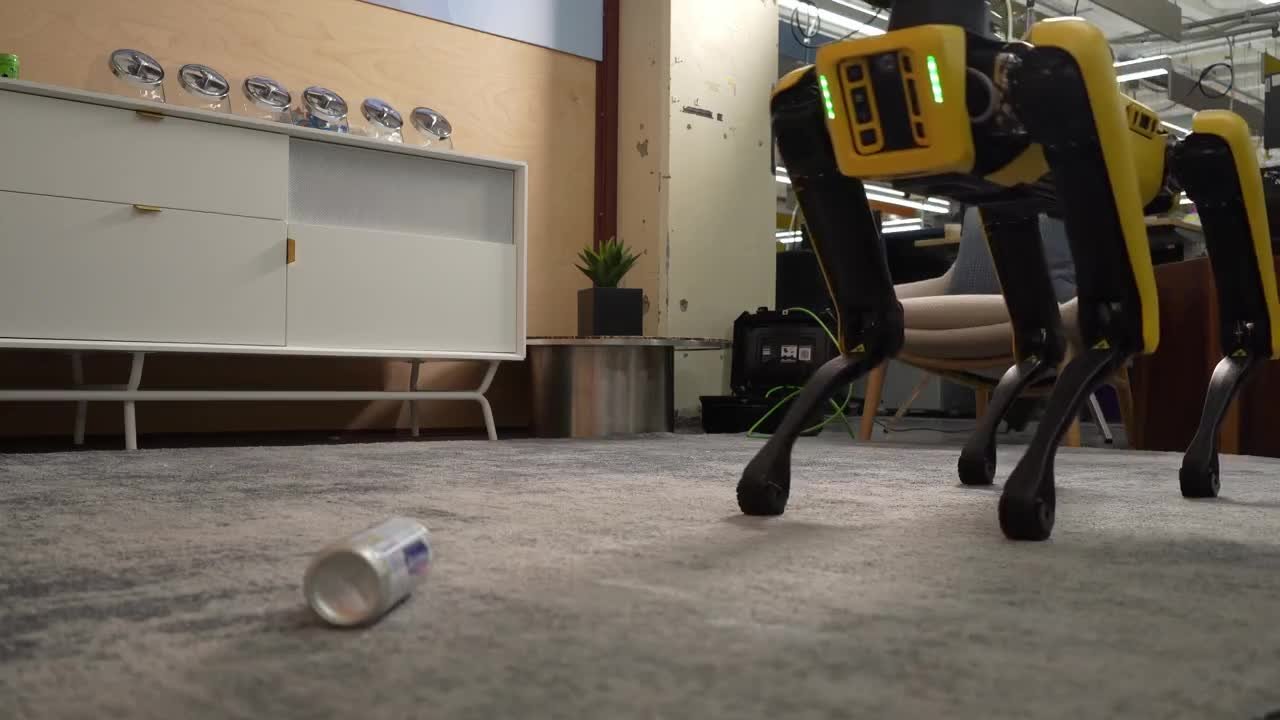
The practical demonstration involved a Boston Dynamics Spot robot learning to toss soda cans into a trash bin. Argon first built a virtual replica of the environment from a single photograph, generated training tasks within it, and produced thousands of simulated episodes. The robot then transferred that training to real hardware, with two additional AI agents verifying gripper and foot positions. Google says the success rate climbed from 56 to 75 percent while execution time dropped from 35 to 24 seconds.
What the Model Actually Does
Argon’s role in the pipeline spans three distinct functions:
- Environment generation: From a single photo, it constructs a virtual training world and populates it with tasks and episodes
- Video world direction: It writes timestamped instructions for Gemini Omni, a video world model that renders those instructions as training footage, then reviews individual frames to adjust subsequent commands
- Data evaluation: It flags quality problems in robot action videos, such as pauses or botched grips, to filter out bad training data
Google also showed Argon improving its own performance mid-task. In a demo where a robot arm placed a Lego brick, Argon reviewed camera images and failure logs across three attempts, cutting execution time from 58.9 to 17.4 seconds. A separate demo had the model direct a robot to spell “ARGON” using scattered Scrabble tiles, with Argon adjusting its instructions frame by frame until the outcome matched the target.
Where the Benchmarks Tell Two Different Stories
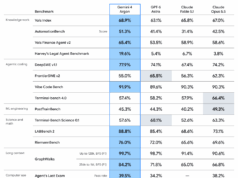
On Google’s own ERQA benchmark for spatial and physical reasoning, Argon scored 87 percent, ahead of Claude Opus 5.5 at 82.3 percent and GPT-6 Astra at 81 percent. The AA-Robotics benchmark, which tests language models controlling a real robot arm across eight tasks, produced a different result: Argon placed third with 55 out of 100 points, behind GPT-6 Astra at 69 and GPT-6.1 Sol at 65.
Google’s blog post does not provide failure rates for individual demos, nor does it specify how many total attempts sit behind the 75 percent success rate figure. Argon also still depends on detailed human prompting. For zero-shot tasks like righting an overturned cup, the model receives a camera image with a grid overlay alongside pre-built commands, and Google’s published prompts include extensive prohibition lists designed to prevent the model from taking shortcuts during simulation.
Argon is available through Google AI Studio and the Antigravity development environment for Google AI Ultra subscribers, and via the paid tier of the Gemini API.
Hashlytics Take
The benchmark split is the detail worth sitting with. Google leads on the test it designed and publishes, and places third on the independent one. That gap does not disqualify Argon, but it reframes the “one model for all of robotics” pitch. A unified pipeline is genuinely useful architecture, and the simulation-to-real transfer numbers are real. The problem is that Google is presenting both things as the same story, and they are not. Leading on ERQA is about spatial reasoning in controlled conditions. Placing third on AA-Robotics, where a model actually drives a robot arm through physical tasks, is the harder number. Until the independent benchmark moves, the physical AGI framing is further ahead of the evidence than the demos suggest.
Follow Hashlytics on Bluesky, Facebook, LinkedIn , Telegram and X to Get Instant Updates