+1.55%
+4.54%
+6.70%
+0.76%
+4.87%
+3.43%
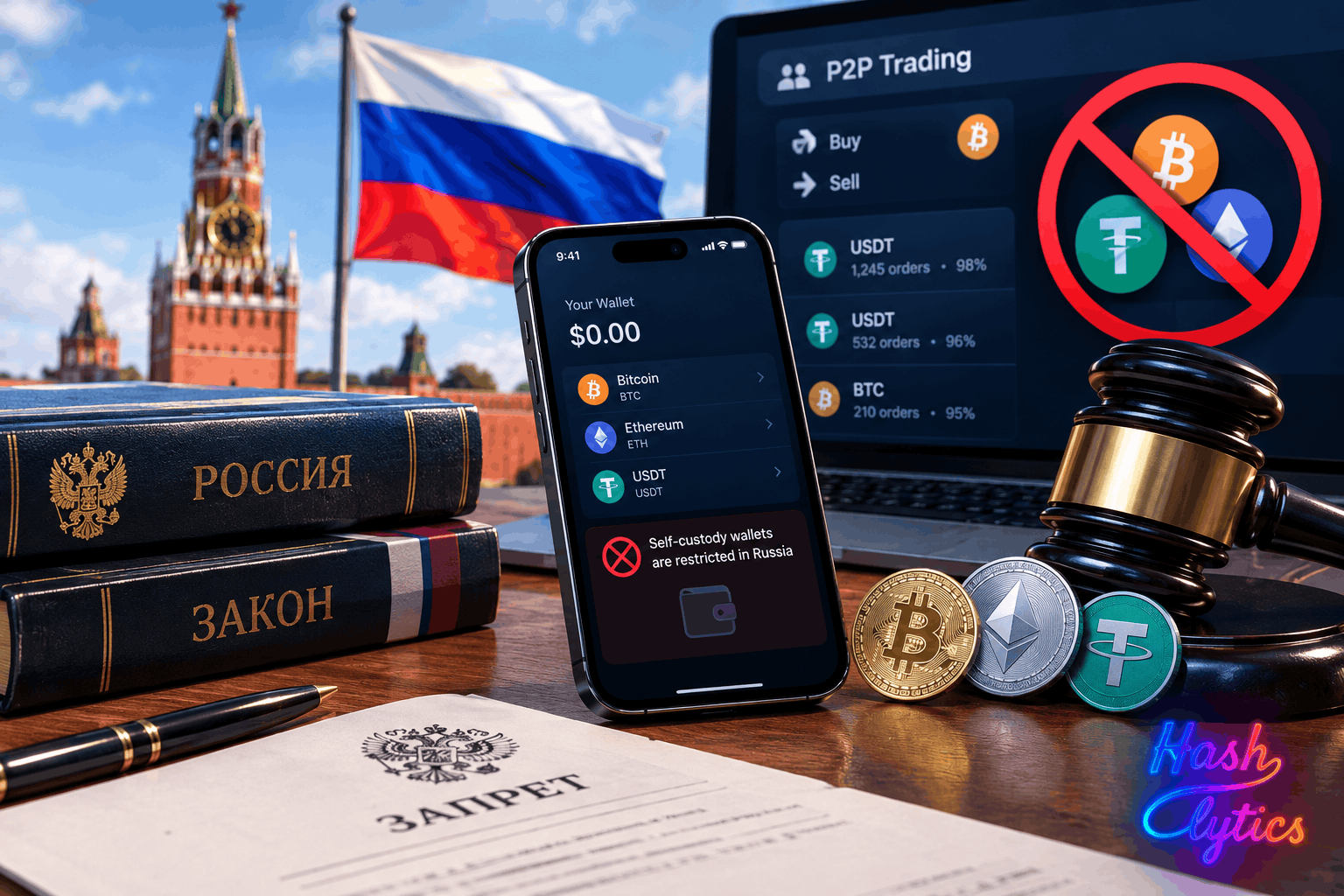
Under the new rules, all crypto transactions must flow through state-licensed intermediaries. Direct P2P trading between individuals is prohibited, as is moving digital assets out of regulated wallets into non-custodial options. That ban covers hardware wallets like Ledger and Trezor and software wallets such as Trust Wallet and MetaMask. State-owned banks Sberbank and VTB have been authorized to offer custodial and exchange services in place of those previously self-managed channels.
Who Can Buy What, and How Much
A regulation effective September 1 introduced a mandatory crypto risk knowledge test and split retail participants into two categories. Non-qualified investors face an annual purchase cap of 300,000 rubles (roughly $3,840) and are limited to Bitcoin, Ethereum, and Tether, which the Bank of Russia designates as sufficiently liquid. Qualified investors, including certified professionals and institutions, retain unlimited purchasing power. Using any cryptocurrency as legal tender inside Russia remains illegal under both the old and new frameworks.
Full enforcement of the P2P ban arrives on July 1, 2027. Until then, traders are expected to migrate to regulated channels.
What Russia Kept Permissive on Purpose
Not everything tightened. Russia has simultaneously loosened restrictions on crypto for cross-border import and export transactions, a carve-out widely read as a mechanism to keep sanctions-affected trade moving. Russians can still hold and trade crypto abroad through foreign bank accounts, provided they report the relevant tax information. The domestic crackdown and the international permissiveness exist in the same policy package, which tells you something about the actual intent.
Hashlytics Take
The framing from Moscow is consumer protection and regulatory order. The architecture of the policy tells a different story. Banning self-custody while explicitly preserving cross-border crypto use for trade is not a safety measure; it is a control structure. Russia wants state visibility into domestic holdings and transactions, particularly under sanctions pressure, while keeping a parallel channel open for trade it cannot run through the dollar system. The 2027 grace period is generous enough that this will not trigger an exodus before compliance infrastructure matures, but the end state is clear: crypto in Russia becomes a state-monitored instrument, not a permissionless one. The crypto community’s reaction that “Russia killed on-chain trading” is accurate for the domestic retail market. What it did not kill is the strategic use case that motivated the policy in the first place.
Follow Hashlytics on Bluesky, Facebook, LinkedIn , Telegram and X to Get Instant Updates