Codex CLI Gets Git Worktrees
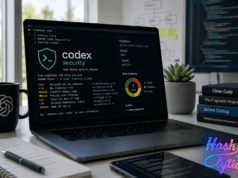
OpenAI’s Codex CLI jumped to version 0.162.0, adding managed Git worktree tools and task pinning inside its Command Center interface. Worktrees let a single repository check out multiple branches into separate folders at once, which gives autonomous agents a sandboxed branch to work in without developers running git worktree add manually. The release also shipped a /copy command and a fix for CRLF line-ending bugs on Windows. OpenAI switched Codex’s default model to GPT-6.1 Sol, released September 29 and priced at roughly a fifth of GPT-6 Astra, with a 95 percent discount on cached input tokens.
The convenience comes with a tradeoff. Broader filesystem access for an unsupervised agent raises the stakes if it misfires, and OpenAI has scoped the feature to “trusted local projects,” effectively handing engineering teams the job of defining what counts as trusted. Many teams are now treating agent-written branches like a junior developer’s first pull request, with mandatory review gates before anything merges.
Claude Code Bets on Cost Predictability
Anthropic’s Claude Code 2.1.296 took a narrower approach, introducing workflow-level model control that lets teams pin every subagent in a pipeline to a single chosen model via the CLAUDE_CODE_WORKFLOW_SUBAGENT_MODEL environment variable. For cost-sensitive multi-agent pipelines, that turns model selection into a policy decision rather than something each subagent figures out on its own. The release also added per-subagent autoCompactWindow settings. Unlike OpenAI, Anthropic publishes clear per-token pricing: Claude Haiku 5.5 (October 7) lists at $0.10 per million input tokens and $0.50 per million output tokens, with Sonnet 5.5 and Opus 5.5 priced higher up the stack.
- 74 percent of large organizations have deployed at least one AI agent, per IDC’s 2026 Future Enterprise Resiliency and Spending Survey
- Coding agents account for 53.6 percent of organizations’ agentic-AI budgets, more than any other agent type
- 65.9 percent of developers now use AI coding assistants or agents, per the 2026 Stack Overflow Developer Survey, up sharply from last year
- Claude Code leads usage at 65.5 percent of respondents, versus 29.5 percent for OpenAI Codex
JetBrains entered the race too, releasing its open-weight Mellum 2.1 model in October as a self-hostable alternative to the closed, subscription-priced CLIs from the two market leaders.
Verifiable Costs Beat Vague Discounts
OpenAI’s “roughly a fifth of GPT-6 Astra” pricing line sounds aggressive until you try to use it for actual budgeting. Without a published absolute rate, buyers can’t compare GPT-6.1 Sol against Claude’s per-token numbers without doing OpenAI’s homework for them. Anthropic’s decision to publish flat pricing while OpenAI leans on relative comparisons says less about raw cost and more about which company expects enterprise buyers to shop on price transparency versus brand momentum. That asymmetry is likely why many engineering teams keep both CLIs in rotation rather than picking a side.
Follow Hashlytics on Bluesky, Facebook, LinkedIn, Telegram and X to Get Instant Updates