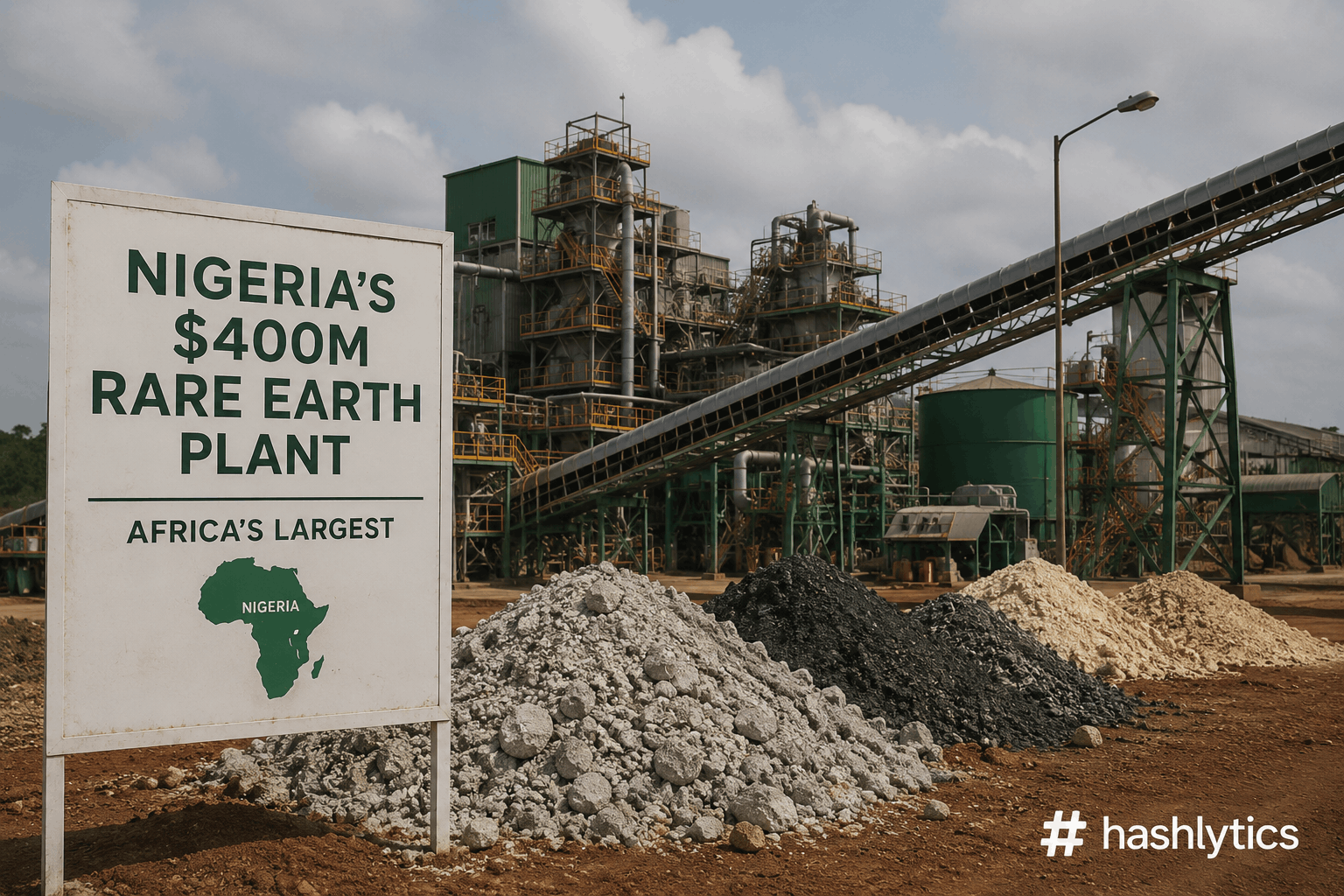
The minerals being processed include platinum, uranium, chromium, tantalum, and tungsten, all critical to semiconductors, electric vehicles, renewable energy systems, and defense technology. The plant uses closed-loop processing technologies designed to separate radioactive elements to “zero level,” aligned with UK environmental standards.
Why This Matters Globally and for Nigeria Specifically
China currently controls roughly 60% of global rare earth mining and over 85% of processing capacity. US tariffs on Chinese rare earths, which reached 145% during the 2025 trade escalation before partial easing, sent governments and manufacturers scrambling for alternative supply chains. The EU’s Critical Raw Materials Act, which took effect in 2024, sets binding targets for sourcing 40% of strategic minerals domestically or from diversified partners by 2030. Nigeria, sitting on an estimated $700 billion in untapped mineral wealth including significant rare earth deposits in Nasarawa, Plateau, and Cross River states, is the obvious African beneficiary of that scramble, if it can move processing capacity fast enough to be credible.
Minister of Solid Minerals Development Dele Alake has framed the project as a direct rejection of what he called “the colonial absurdity of exporting raw materials and importing finished products at five times the cost.” That framing matters for Nigeria’s economic policy context: the Tinubu administration set a target of growing mining’s share of GDP from under 1% to 10% by 2026, a target that will not be met on schedule but that the Hasetins plant advances structurally. Nasarawa Governor Abdullahi Sule described the plant as the first facility of its kind in Nigeria and called it a transformation of the state into a “hub for high-technology production.”
The Questions That Remain Open
The headline numbers are striking. The unanswered questions are equally so. Hasetins has not published independent geological surveys confirming the grade, concentration, or commercial viability of feedstock supplies. The $400 million investment status is unclear: whether funds are secured, under negotiation, or contingent on yet-unnamed lenders has not been disclosed publicly. No construction timeline or completion date has been announced. The company collects supplementary feedstock from artisanal miners alongside its own sites, which introduces supply chain consistency questions that large industrial buyers in the EU and US will scrutinize before signing offtake agreements.
Rare earth project expert analysis from Rare Earth Exchanges noted that project viability hinges not just on the presence of rare earths but on the specific element mix, with cerium at the low-value end and terbium or scandium at the high end, and that without independent feasibility data, Nigeria’s ambition cannot yet be validated commercially. The federal delegation’s compliance visit and sign-off on the Environmental and Social Impact Assessment is an encouraging signal that this is not a paper announcement, but the gap between groundbreaking and full production at 18,000 tons per year remains significant.
The Semiconductor and Tech Supply Chain Angle
For the tech and AI industries specifically, rare earth processing capacity in Nigeria is a long-term supply chain story. The minerals coming out of Nasarawa feed directly into the components that power data centers, GPU fabrication, electric vehicle batteries, and satellite systems. As the US and EU aggressively diversify away from Chinese rare earth dependence, African processing capacity with verifiable environmental standards and stable political backing becomes commercially valuable, not just geopolitically symbolic. Nigeria’s ability to attract semiconductor-adjacent investment, including the chip processing interest that has been circulating in policy discussions domestically, depends partly on demonstrating it can handle upstream critical mineral processing at industrial scale.
If Hasetins delivers, Nigeria becomes a serious node in the global critical minerals supply chain at a moment when that chain is being deliberately rebuilt. If the project stalls at the feasibility or funding stage, as several prior large-scale Nigerian mining announcements have, it reinforces the credibility gap that has kept foreign industrial investment cautious. The compliance visit and government backing are real. The production numbers, for now, remain a projection.
Follow us on Bluesky, LinkedIn, X, and Telegram to Get Instant Updates