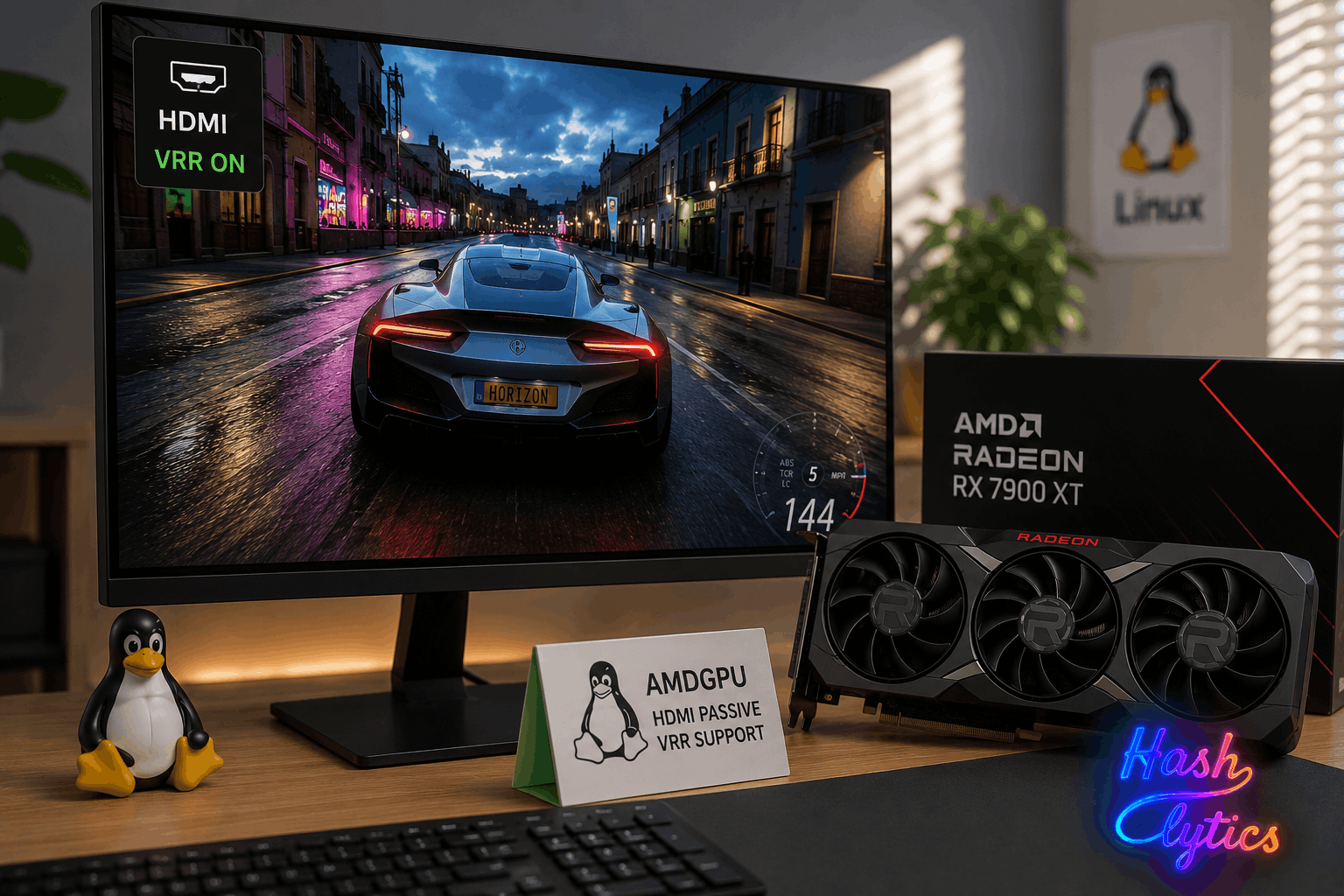
DisplayPort and Embedded DisplayPort connections already handle VRR transitions seamlessly. HDMI never had that same guarantee, which is exactly what Passive VRR is built to fix.
Fixing the Flicker
Without Passive VRR, switching a display into variable refresh mode can cause the screen to briefly go blank or flicker. That happens because the HDMI sink drops out of sync during the transition. Passive VRR solves this by keeping the display in its variable refresh state continuously, even while the desktop is running at a fixed refresh rate.
In practice, that means the flicker and blank screen users have dealt with when toggling VRR on Linux should disappear entirely.
Why This Got Split Into Its Own Patch
Passive VRR was originally bundled inside AMD’s larger HDMI 2.1 gaming patch series, alongside VRR and Auto Low Latency Mode. AMD has since pulled it out into its own dedicated patch series, likely to keep review and testing more manageable after the earlier series missed its window.
The new patches enable Passive VRR by default, though users who prefer the older blanking behavior can still opt out.
Targeting the Linux 7.4 Window
The patches are currently under review. AMD is aiming to get Passive VRR merged in time for the Linux 7.4 window, expected to open in late October. Given that the previous HDMI 2.1 series slipped a cycle after missing 7.3, a lot rides on whether this smaller, split-off patch clears review in time.
Follow Hashlytics on Bluesky, Facebook, LinkedIn , Telegram and X to Get Instant Updates