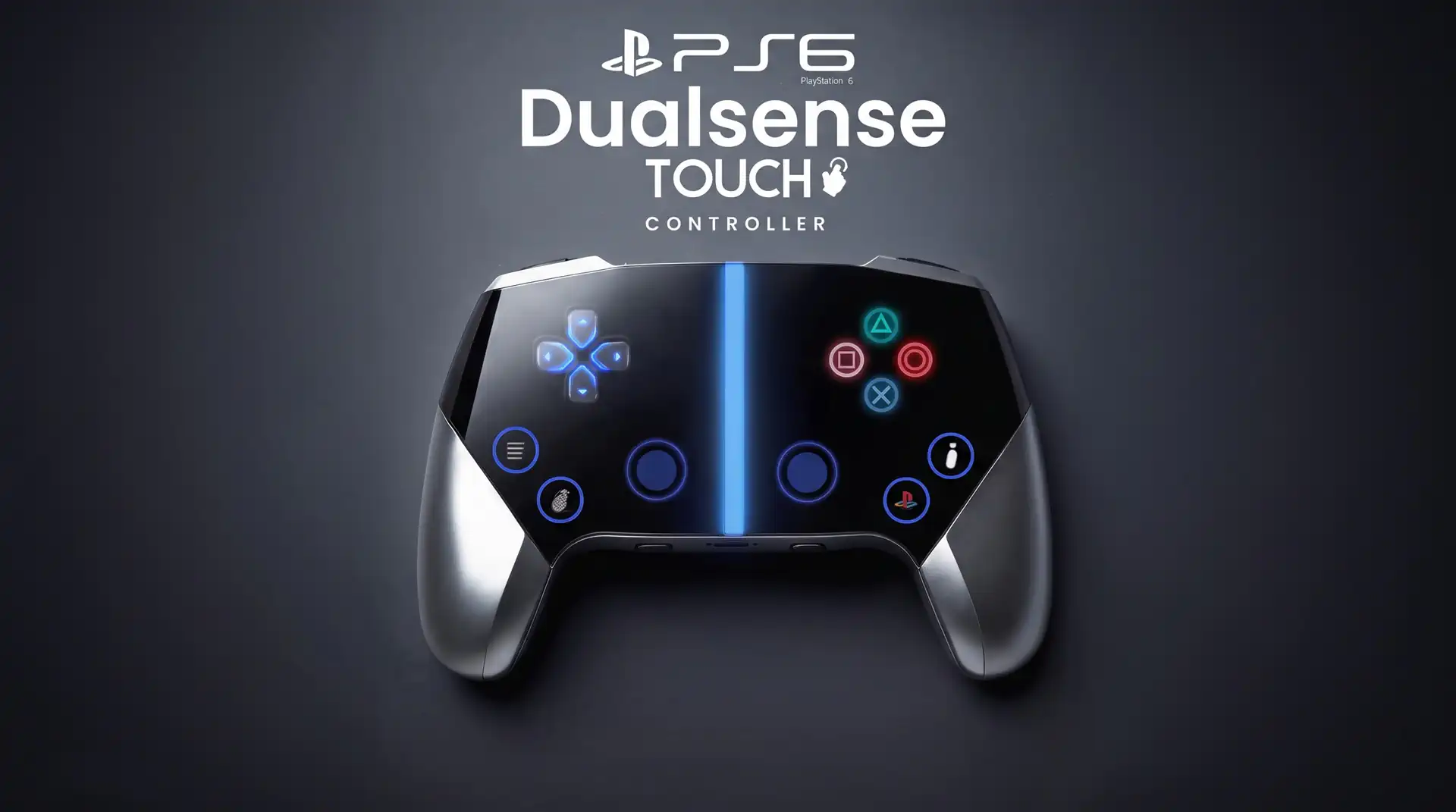
A Controller With No Buttons at All
The patent’s engineering diagrams show a complete absence of mechanical controls. The whole front surface is one touchpad with an integrated display, which renders software-generated input elements in place of hardware.
Sony’s accompanying documents frame this as an ergonomics fix. Standard gamepads have fixed physical dimensions, which makes some keys hard to reach for players with non-standard hand sizes. A single flat surface is meant to remove that barrier for every player.
Customization is the other selling point, and it goes deep. Users can freely move virtual sticks, resize numeric keys, adjust the distance between elements and add extra shortcuts for specific gameplay scenarios. The software can also switch layouts to match a game’s requirements or load saved player profiles. That could create efficient virtual workspaces for any genre and tune response speed without mechanical modifications.
Why Sony Added Heat and Pressure Sensors
Accidental touches and the lack of tactile feedback are the usual complaints about touch interfaces, and Sony’s engineers appear to have planned for them. The patent describes heat sensors that record finger temperature signatures and pressure sensors that measure mechanical force. Together they are meant to separate intentional commands from passive finger movement. You can discuss the design further on X.
A Patent Is Not a Product
A detailed filing does not guarantee commercial production, and this design may not launch with the PlayStation 6 console. It does show where Sony’s engineers are focusing their research. It suggests the company is exploring radical new ways for players to interact with games, with possible influence on future hardware from companies like ASUS.
Hashlytics Take
The sensor stack is the most revealing part of this filing. Heat and pressure sensing only become necessary because a flat surface cannot tell a deliberate press from a resting thumb, a problem physical sticks never had. Until a design like this proves it can match a stick’s feel and reliability in a fast shooter, it looks more like a customization and accessibility experiment than a replacement for the traditional layout.
Follow Hashlytics on Bluesky, Facebook, LinkedIn , Telegram and X to Get Instant Updates