-1.28%
-2.02%
+1.32%
-2.44%
+1.17%
-3.05%
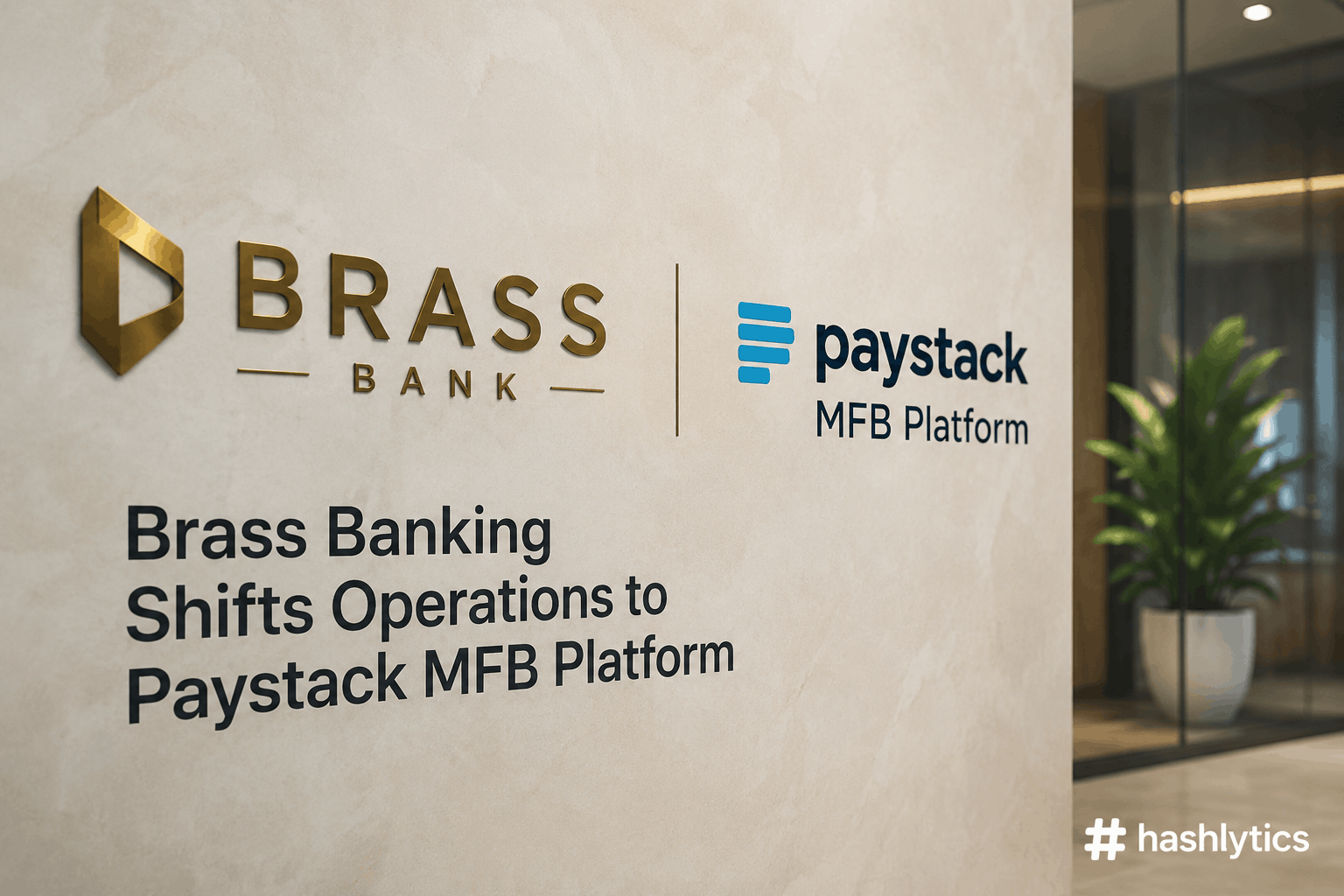
Brass Banking Pivots to Paystack MFB Infrastructure
The transition sees Brass Business Banking integrating its services with Paystack Microfinance Bank’s robust infrastructure. This strategic alignment allows Brass to leverage a licensed banking partner for its regulated operations, a growing trend among fintech companies in the region. Sources familiar with the development indicate that this move will enable Brass to intensify its focus on product design, customer experience, and specialized SME tooling, while Paystack MFB provides the essential regulated backbone for deposits, payments, and compliance activities.
Strategic Consolidation in Nigeria’s Fintech Sector
Paystack, a prominent player initially known for its core payments processing business, has expanded its reach by securing a microfinance banking license. This expansion positions Paystack as a critical enabler for other fintechs seeking regulated rails without the substantial operational burden of obtaining full banking licenses themselves. For Brass, the integration promises enhanced speed, reliability, and broader regulatory coverage for its business customers, who rely on the platform for account management, payments, and cash flow tools.
Driving Efficiency and Compliance for Fintechs
This development reflects a broader trend within Nigeria’s dynamic fintech ecosystem. Infrastructure providers are increasingly consolidating their influence by becoming “banks behind the banks.” Rather than building parallel, often redundant, systems, newer fintech brands are opting to integrate with existing regulated platforms. This approach allows them to scale faster and efficiently meet the stringent compliance requirements set by the Central Bank of Nigeria.
While the move is expected to improve stability and operational efficiency for Brass, it also raises pertinent questions about differentiation within the SME banking landscape. A growing number of startups now depend on a limited set of licensed backend providers. This reliance, while improving overall market stability, could lead to increased standardization of features across competing platforms, potentially impacting unique value propositions.
Neither Brass nor Paystack has publicly detailed the full operational timeline for this transition. However, onboarding and migration processes are anticipated to roll out in phases. This phased approach aims to minimize disruption for existing customers. The ongoing evolution of such partnerships will be crucial to watch as Nigeria’s digital economy matures, particularly given past operational challenges faced by fintechs. Brass has previously undergone staff adjustments amidst economic pressures, making this infrastructure shift a strategic pivot for sustained growth.
Follow Hashlytics on Bluesky, LinkedIn , Telegram and X to Get Instant Updates