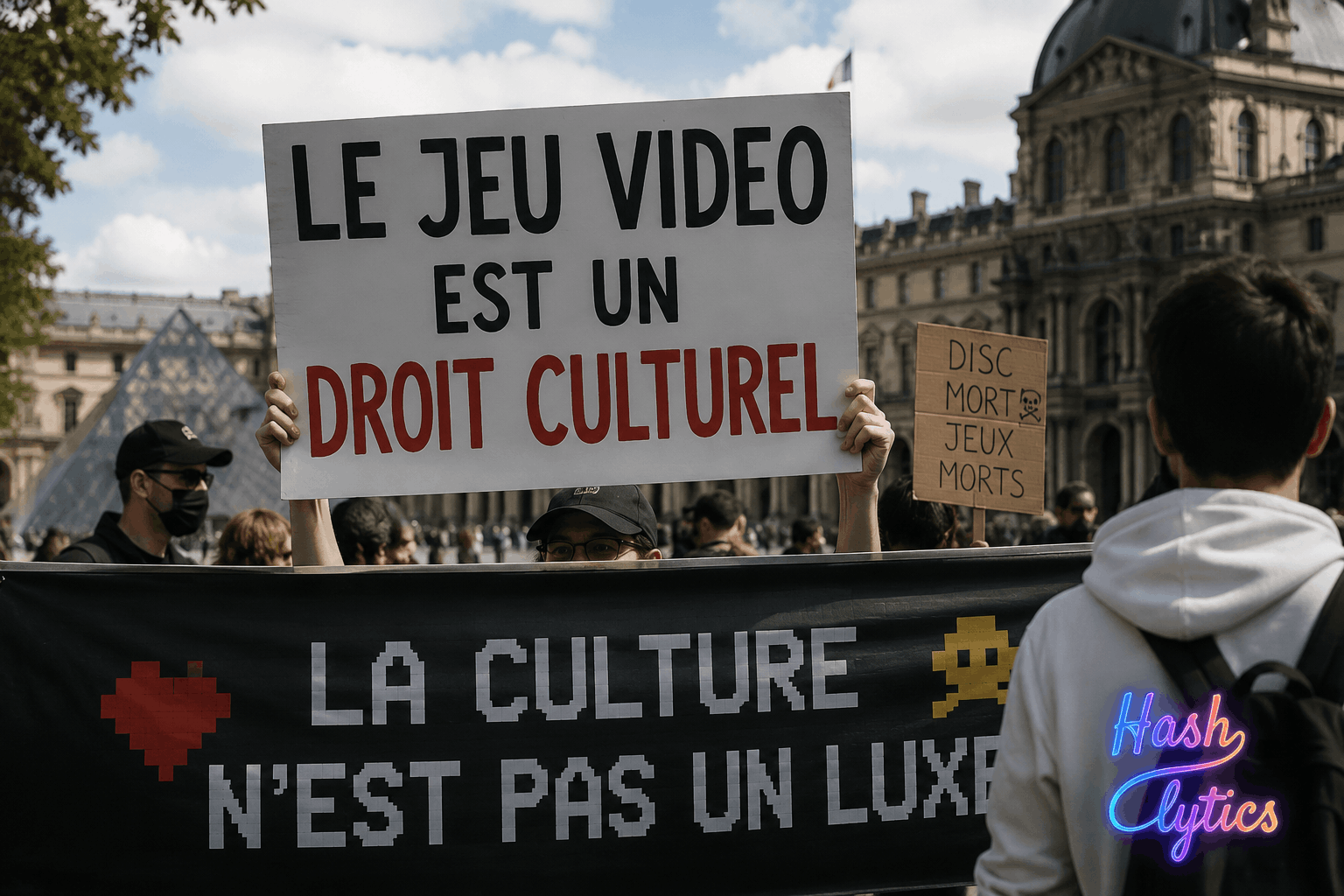
The trigger was two overlapping announcements. GTA 6, the most expensive entertainment product ever made at an estimated $2 billion in development costs, launched pre-orders on June 25, 2026 with no physical disc at all. The retail box contains a download code on paper. Rockstar has no plans for a disc version. Four days later, Sony confirmed the same trajectory for all PlayStation games from 2028.
The Ownership Crisis Nobody Is Pricing In
The disc debate is not really about discs. It is about what you own after paying. Sony already demonstrated the stakes when it notified PlayStation Store customers that 551 films and series distributed by StudioCanal would be deleted from their personal libraries on September 1, 2026, due to an expired licensing agreement. Titles including Terminator 2 and Total Recall, purchased and paid for, simply gone. The 30-day DRM controversy earlier this year showed the same infrastructure can restrict game access without notice.
An X commenter raised the obvious technical counter: “But how do you fit 300 or 500GB onto a CD?” It is a fair question, and it is also the wrong question. Modern game sizes make optical disc distribution impractical at current Blu-ray densities for some titles, but the uproar is not about the medium. It is about the model. A disc gives you a licence that exists independently of a server. A download code gives you access that exists only as long as the company decides to honour it.
Why France Is the Right Country to Fight This
France has a serious legal tradition of treating cultural goods differently from ordinary commercial products. The Lang Law of 1981 fixed book prices to protect publishers and booksellers from price-dumping. The Centre National du Cinéma funds French film through levies on ticket sales, DVD sales, and broadcaster revenue. Video games are already recognised as cultural goods by the French Ministry of Culture. That legal infrastructure makes Mélenchon’s 2027 legislative commitment more credible than a politician in most other countries making the same statement.
The core legal question his team will need to answer is whether purchasing a digital licence constitutes a sale under French consumer law, or a service subscription. EU Directive 2019/770 on digital content and services introduced specific protections for digital purchases, including guarantees of conformity and rights when content is modified or withdrawn. Sony’s simultaneous pullback from PC game distribution and its StudioCanal deletion show that content withdrawal is active policy, not theoretical risk, which gives consumer protection advocates concrete examples rather than hypotheticals.
The Wider Political Signal
Mélenchon is not the only European politician watching this closely. The EU’s Digital Markets Act already targets platform gatekeeping in app stores and operating systems. PlayStation’s live service pivot combined with all-digital distribution creates exactly the closed ecosystem regulators in Brussels have been scrutinising in mobile. If one country passes legislation protecting digital game ownership rights, it sets a template that EU consumer protection bodies can extend across the bloc.
For players, the practical question is simpler than the legal one. Games already launch at 70 to 80 euros in Europe. Removing physical distribution eliminates used game markets, retailer price competition, and the ability to resell what you bought. None of the manufacturing savings Sony gains from dropping discs are being returned to consumers. Mélenchon’s framing, that players are paying more for less, with fewer rights, is not politically radical. It is arithmetically correct.
Follow us on Bluesky, LinkedIn, X, and Telegram to Get Instant Updates