+0.24%
-0.17%
-2.00%
+3.72%
+0.88%
-0.88%
What the New Law Actually Does
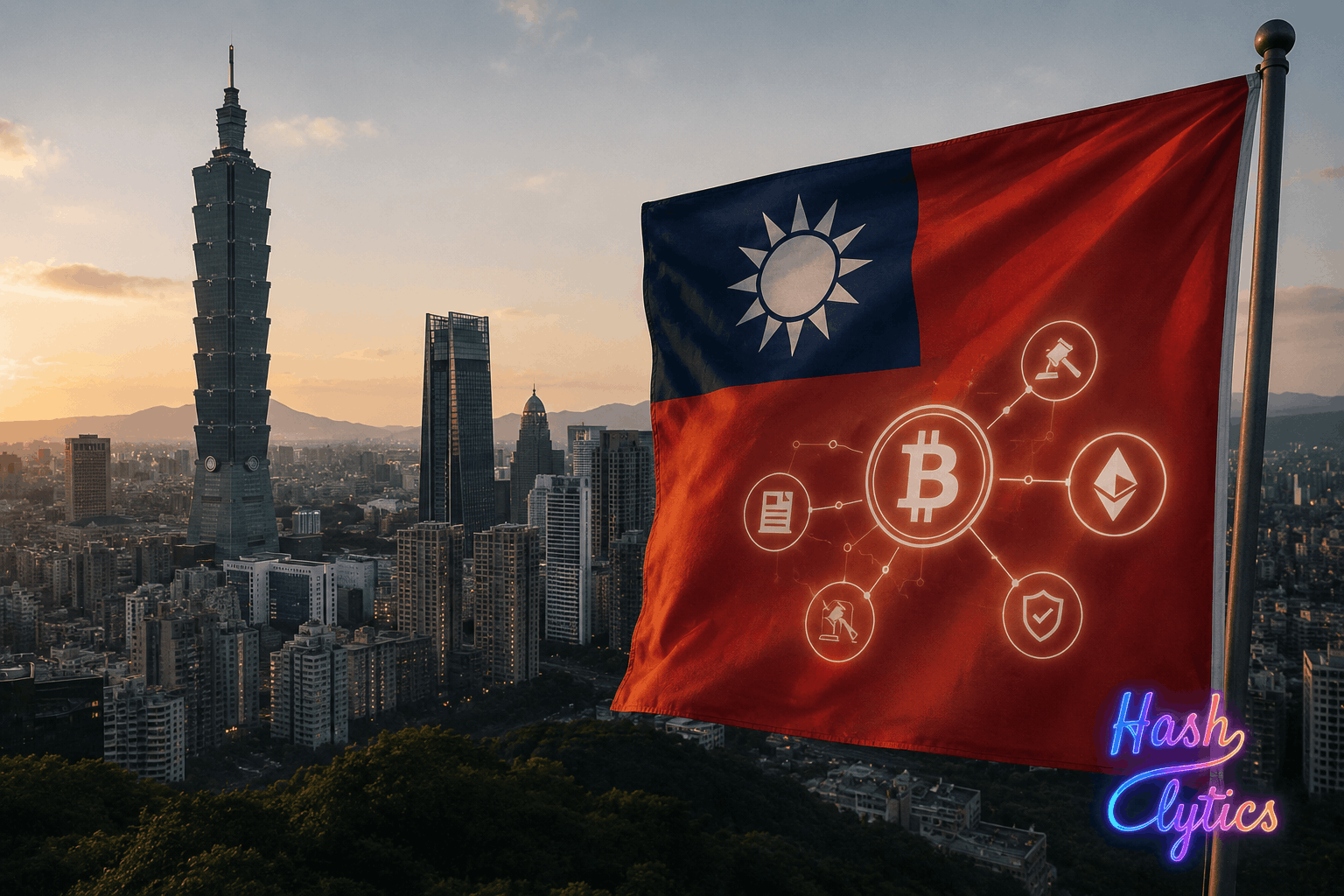
The Virtual Asset Service Act establishes clear rules for the first time. Rather than operating in a gray zone, cryptocurrency exchanges and stablecoin issuers now have a defined regulatory path forward. This clarity matters because it removes uncertainty that has long plagued the sector.
The legislation specifically targets virtual asset service providers, creating licensing requirements and compliance standards that didn’t exist before. It’s the kind of foundational regulatory work that typically precedes more mainstream adoption.
Taiwan’s Financial Regulator Gets Real Authority
Taiwan’s Financial Supervisory Commission (FSC) has been informally overseeing crypto assets since 2023, but it was working without explicit legal backing. The new act changes that by giving the FSC statutory authority to enforce rules across the sector. This means:
- Clear licensing requirements for exchanges and stablecoin issuers
- Formal enforcement mechanisms for compliance violations
- Consumer protection standards backed by law
- Ongoing oversight of market participants
In practice, this transforms the FSC from an agency trying to regulate without proper legal tools into one with real enforcement power.
Stablecoins Get Special Attention
A significant portion of the new act focuses specifically on stablecoins. These fiat-backed tokens have become increasingly important in crypto markets, but they’ve also attracted global regulatory scrutiny. Taiwan’s decision to address them head-on shows the country is keeping pace with international concerns.
The stablecoin provisions are designed to enhance Taiwan’s competitiveness in the international financial sector while ensuring that token issuers maintain proper reserves and compliance standards. This balancing act is what regulators worldwide are grappling with right now.
Aligning with Global Standards
Taiwan’s approach doesn’t exist in a vacuum. The new legislation mirrors similar frameworks already in place across the region. Japan, South Korea, and Hong Kong have all moved toward comprehensive crypto regulation in recent years.
This harmonization matters. When neighboring financial hubs adopt comparable rules, it becomes easier for companies to operate across multiple markets and for capital to flow more freely. Taiwan’s alignment with these peers makes it a more attractive operating environment for serious crypto businesses looking for regulatory stability.
What Markets Should Watch
The law is now on the books, but implementation will determine whether it delivers on its promise. Focus areas to monitor include:
- How quickly the FSC issues licensing guidelines
- Which existing exchanges apply for formal licenses
- How stablecoin issuers respond to new capital and reserve requirements
- Whether domestic financial institutions expand crypto offerings under the new framework
A regulated environment typically reduces friction for legitimate investors, potentially drawing more capital into Taiwan’s crypto space. How successfully the FSC enforces these new rules will largely determine whether this legislation becomes a genuine competitive advantage or just another piece of paper.
The goal is to create a secure and transparent digital asset ecosystem that works for both users and institutions. Whether Taiwan achieves that in practice will play out over the coming months as the regulations take effect.
Follow Hashlytics on Bluesky, LinkedIn, Telegram and X to Get Instant Updates