Google I/O Unveils AI Innovations, Prioritizing Paid Access
The core message from the Google I/O keynote was a clear focus on AI-driven enhancements across its ecosystem. Google announced a strategic rollout, with the flashiest new features becoming available to paying members first. This approach allows Google to refine its tools with its most engaged users, though it may temper excitement for the average free user.
Immediate Rollout of Gemini 3.5 Flash and Omni Flash
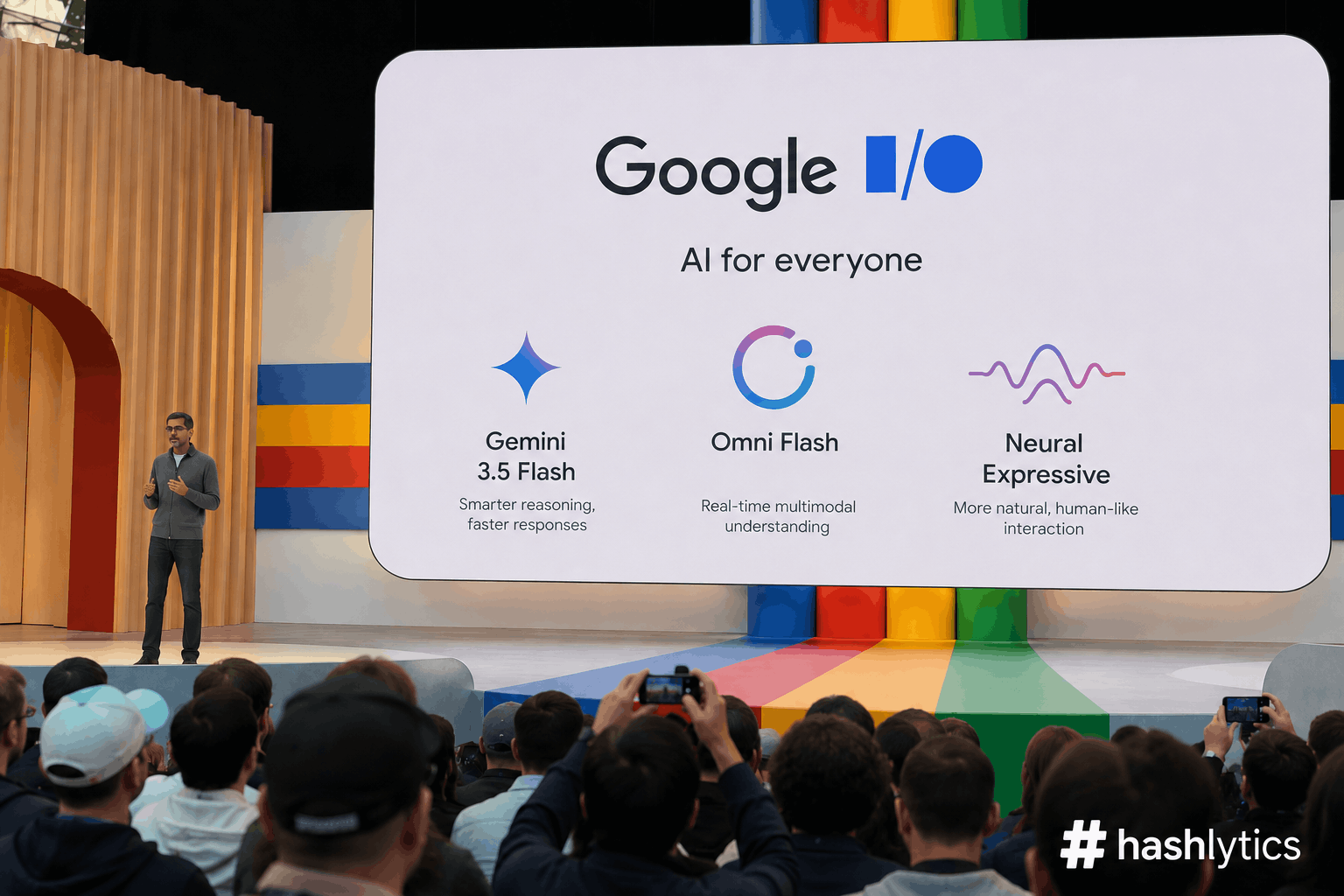
The biggest announcement was the immediate launch of Gemini 3.5 Flash, now the default model for the Gemini app and Google Search. Google states that Gemini 3.5 Flash is significantly faster and more efficient in handling complex agentic tasks, making it a powerful update for all users. To experience it, users simply need to open the Gemini app or activate Google AI Mode.
Additionally, Gemini Omni Flash was introduced as a new world model, initially focused on video generation. This tool can simulate physics and leverage Gemini’s real-world knowledge to create more accurate environments. Users will be able to edit Omni Flash videos through conversational dialogue. Omni Flash is slated for release later this week, arriving for free in YouTube Shorts and the YouTube Create app, eventually evolving into a fully multimodal model with diverse input and output capabilities.
Enhanced AI Detection with SynthID Integration
Addressing growing concerns about distinguishing , Google announced that Chrome and Google Search will integrate SynthID. This invisible digital watermark, embedded at the point of AI generation, will allow users to detect AI-created images. Users can right-click on an image or utilize Circle to Search to identify if any part of an image was AI-generated. Several third-party entities, including OpenAI, have also adopted SynthID, aiming for widespread detection.
Google Pics and Neural Expressive on the Horizon
Google also teased the upcoming launch of Google Pics, a Canva-like tool for creating images and visual presentations within Workspace apps like Docs and Keep. Powered by Google AI and Nano Banana image generation, Google Pics is scheduled for release this summer, primarily for paid users. However, Google Workspace business account holders through their employers will gain free access.
Furthermore, a new visual design language, Neural Expressive, was unveiled for the Gemini app. This design incorporates more vibrant colors, new haptic feedback, and fluid animations, integrating Gemini Live, the app’s live voice mode, directly into the core user experience. This visual update is available for free in the Gemini desktop and mobile app immediately.
Follow Hashlytics on Bluesky, LinkedIn , Telegram and X to Get Instant Updates