
+0.26%
+0.20%
-2.74%
-0.64%
+0.55%
-0.84%
How the Dispute Reached the Courts
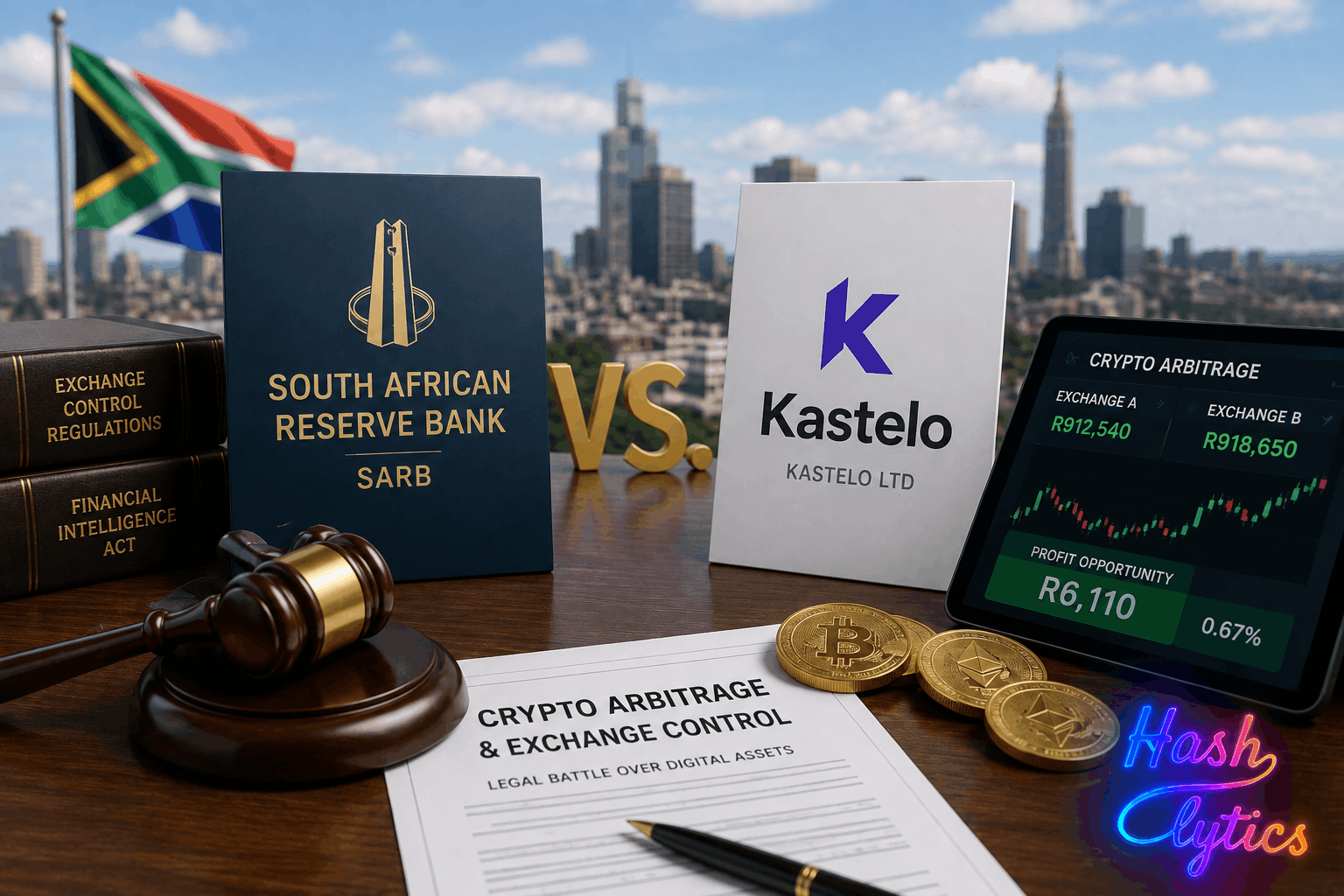
Kastelo’s Access Bank account was frozen after information from the bank, whistleblowers, and clients suggested transactions might contravene exchange control rules, according to public commentary. The case, analyzed by law firm ENSafrica, has moved past initial procedural questions and now scrutinizes substantive regulatory compliance.
Kastelo’s urgent application to set aside the blocking order was dismissed in January 2026 by the Johannesburg High Court. That ruling focused solely on urgency though. The court did not decide whether the blocking order was justified or whether Kastelo’s business model actually complied with regulations.
A blocking order is an interim measure. It carries immediate and severe commercial consequences, but it does not constitute a finding of wrongdoing.
The Foreign Exchange Allowances at the Center of It
The core of the dispute involves individual foreign exchange allowances used in crypto arbitrage. South African residents can externalize limited amounts annually through mechanisms including:
- The Single Discretionary Allowance
- The Foreign Investment Allowance
Both are subject to specific conditions. The SARB’s concern isn’t that crypto arbitrage itself is unlawful. It questions whether Kastelo’s structure, which involves pooling client allowances, aligned with the exchange control framework’s actual purpose. Kastelo maintains it obtained legal advice confirming its model’s compliance.
The SARB reportedly fears that using client allowances in an intermediate, loan-funded model crossed a line, potentially meaning personal allowances were used for a third party’s commercial purpose. Regulators will likely examine the substance of the transactions rather than just how they were described.
What This Means for Fintech Business Models
This case highlights real risk for businesses built on individual permissions. Foreign exchange allowances are personal by design. Platforms that rely on repeated use of multiple client allowances, especially where clients are funded or incentivized to participate, will face intense scrutiny going forward.
Regulators will ask a consistent set of questions in cases like this: who controls the transaction, who bears the risk, and who benefits economically. For fintechs operating in regulated markets, the lesson is straightforward. Innovation must withstand regulatory reconstruction. Businesses need to be able to explain their model’s compliance even after regulators strip away the interface and marketing language.
Where the Case Goes From Here
Interim regulatory action like a blocking order carries immediate commercial impact on liquidity, client confidence, and investor sentiment, even before the merits of the case are determined. That impact is especially significant now, as arbitrage spreads have narrowed substantially, reportedly hovering around 1% in 2026.
The next phase of the Kastelo dispute will be critical. It may clarify how South Africa’s exchange control regime treats crypto enabled, platform based cross border value flows. The unanswered question sits at the heart of the market: when is a client genuinely using their own allowance, and when does a platform’s structure become a regulatory workaround?
Follow Hashlytics on Bluesky, Facebook, LinkedIn , Telegram and X to Get Instant Updates