How Enforcement Would Actually Work
The ban is expected to come into force in Spring 2027, pending legislation before Parliament before Christmas 2026. The preferred model places age verification at the point a user sets up a new device rather than when they create individual accounts. Apple already moved in this direction: iOS 26.4 introduced mandatory age verification for UK iPhone and iPad users, requiring either a credit card or ID scan to confirm users are 18 or over, with certain features disabled for those who do not comply. That rollout was not legally required at the time, but the timing was not coincidental. Meta and Google were fined in the same week over child safety failures, creating a regulatory environment where voluntary compliance ahead of legislation carries lower commercial risk than waiting.
Messaging services including WhatsApp and Signal are excluded from the ban. Livestreaming for under-16s would be banned across all platforms, including those not otherwise on the restricted list. The government is also exploring overnight curfews for social media use and mandatory breaks in infinite scrolling feeds for users under 18, with further details expected in July. AI companion chatbots offering romantic or intimate features would face a minimum age of 18.
The ECHR Problem
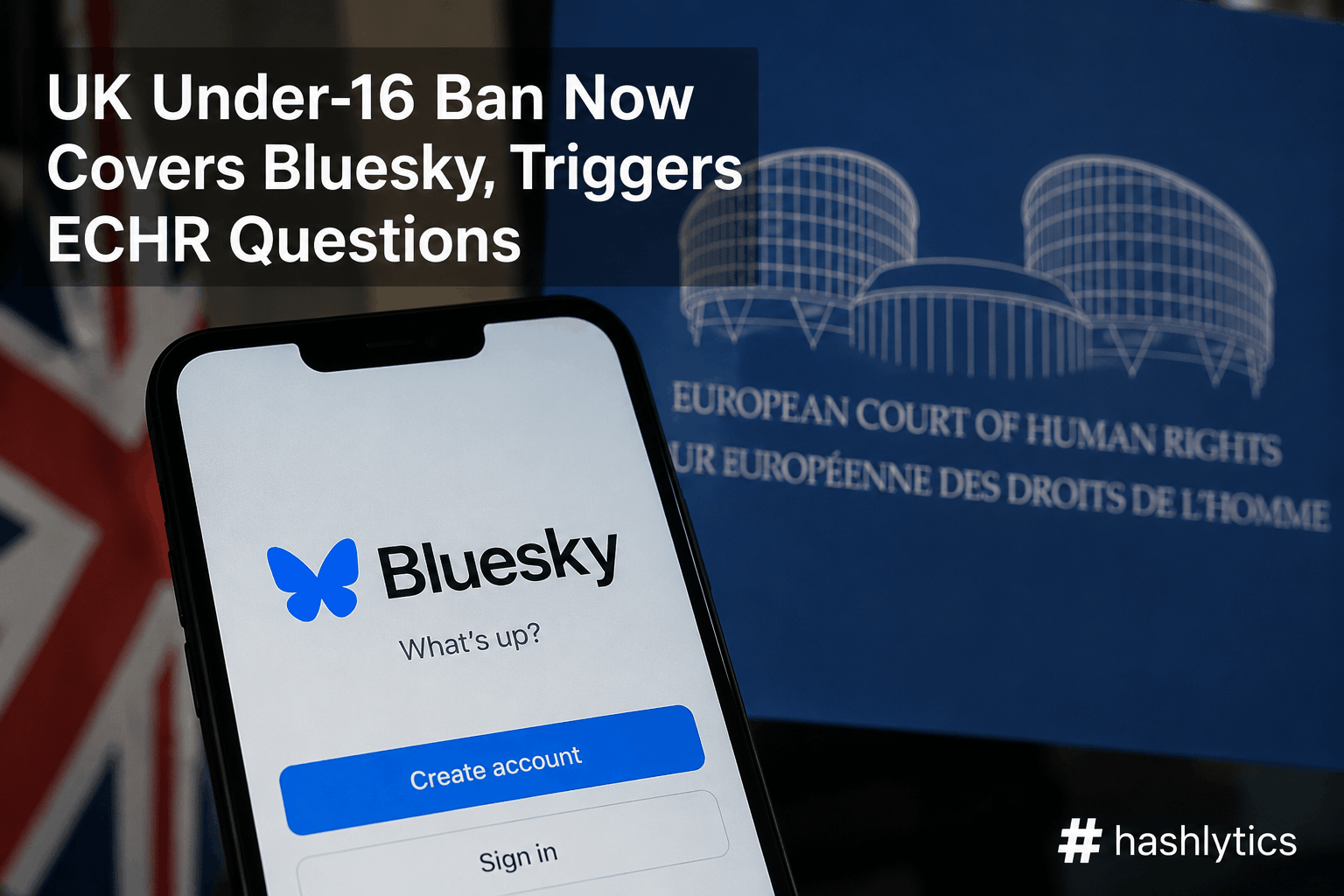
Legal observers have raised whether the ban, particularly device-level verification requiring all adults to confirm identity before accessing social media, conflicts with two provisions of the European Convention on Human Rights. Article 8 protects the right to respect for private and family life, home, and correspondence. Article 10 protects freedom of expression, which courts have consistently interpreted to include the right to receive information without state interference. The Human Rights Act 1998 incorporates both directly into UK domestic law, meaning any legislation implementing device-level identity checks could be challenged on the grounds that it interferes with Article 8 privacy rights disproportionately relative to the child protection aim, or that it chills expression by conditioning access to speech platforms on surrendering anonymity.
The government’s counterargument, standard in proportionality analysis under ECHR case law, is that the interference is justified, necessary in a democratic society, and targeted at a legitimate aim. Courts applying that test look at whether less intrusive means could achieve the same goal. Jasleen Chaggar, senior legal officer at civil liberties organisation Big Brother Watch, told TechPolicy Press she did not think the government knew where it was going with a lot of this, a candid acknowledgement that the legal architecture is still being built around the policy announcement rather than the other way around.
The Macron Signal and the Coordination Question
Emmanuel Macron’s reply to AFP’s breaking news post on the UK ban, “Thanks for joining the movement,” generated immediate commentary. France already has a law banning social media for under-15s passed in 2023, mandatory phone-free school rules in force since 2024, and a planned full ban on smartphones for under-15s by September 2026. Reform UK leader Nigel Farage had warned the ban would introduce digital ID “via the back door” and that VPN adoption would make enforcement unworkable. Macron’s framing of this as a movement rather than a national policy decision validated that reading, suggesting coordinated Western regulatory momentum rather than isolated national responses to evidence on child harm.
Ofcom will conduct a rapid study on effective age assurance for verifying users are over 16. Until that study concludes and legislation passes, the enforcement method remains unresolved. Device-level checks concentrating verification in Apple and Google’s hands, per-app checks distributing that burden across dozens of platforms, or a federated digital ID credential sitting on the device itself each carry different implications for who controls the data, how it could be repurposed, and whether the ECHR challenge that privacy organisations are already preparing would succeed before a UK court or at the European Court of Human Rights in Strasbourg.
Follow us on Bluesky, LinkedIn, X, and Telegram to Get Instant Updates