What YouTube Is Arguing
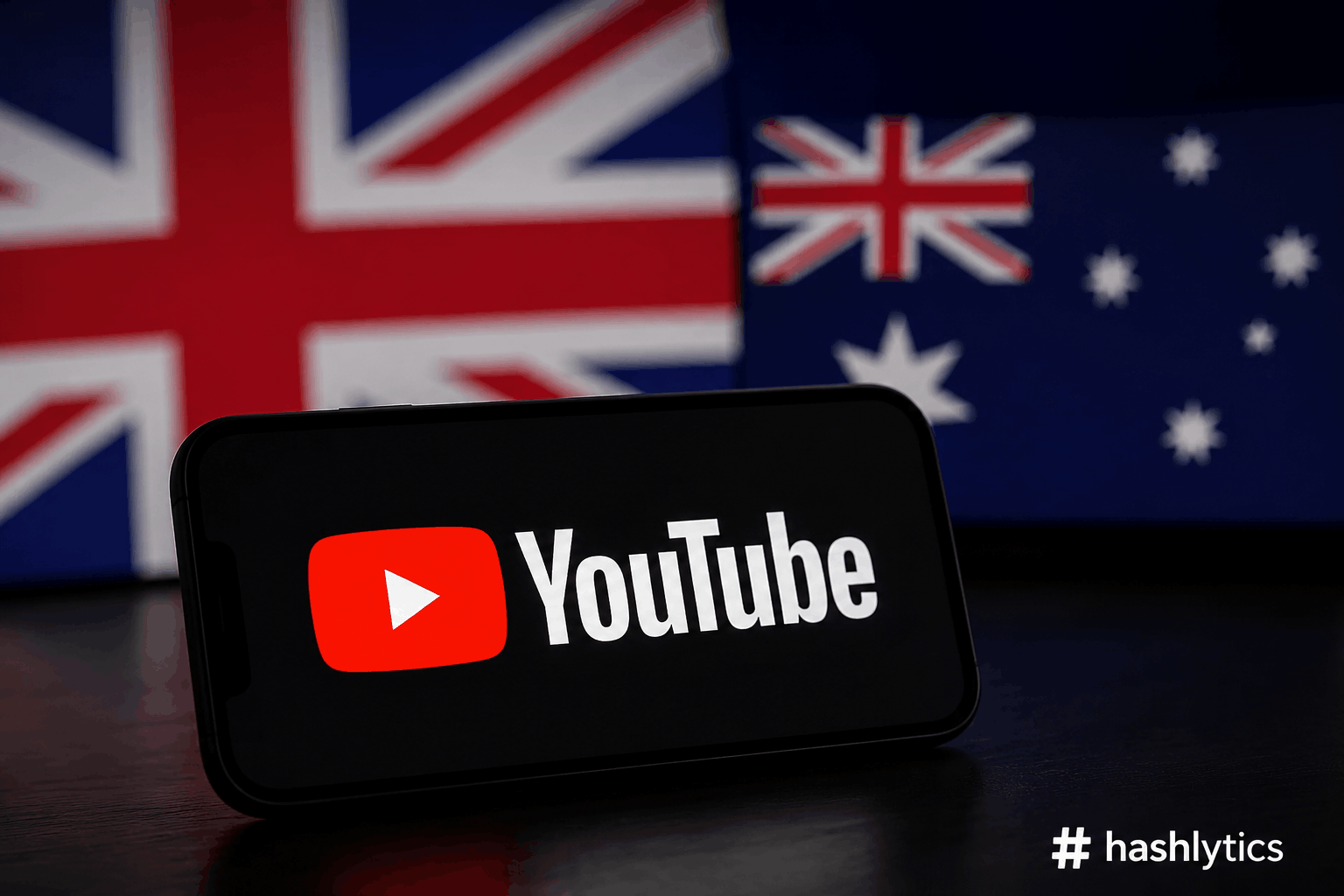
YouTube’s statement framed itself as infrastructure rather than social media, calling itself a vital resource for young people, educators, and parents, and warning that blanket bans push children toward anonymous, less safe services. This echoes the argument YouTube’s Australian spokeswoman made to a Senate committee in October 2025, that the law would be difficult to enforce and would not deliver the safety it promises. The UK government appears to have pre-empted this fight. Officials said the legislation is designed to capture user-to-user platforms built around social interaction, algorithmic feeds, and the ability to post content, a definition broad enough to include YouTube’s comment sections, Shorts, and recommendation system regardless of its educational library.
The Consistency Problem Cuts Both Ways
Critics on X raised two separate consistency questions. One argued that if child safety were the genuine driver, Bluesky would be included alongside X, and that grooming-related failures by UK institutions deserve more attention than platform bans. The other argued the opposite, that YouTube is genuinely different from TikTok or Snapchat because it functions as a learning tool, comparing a ban to blocking access to a library. Both critiques point to the same underlying issue. The same scrutiny applied to Starmer’s earlier device-level nudity proposal applies here: drawing a line between included and excluded platforms requires a functional standard, and the UK has chosen breadth over the carve-outs Australia made, which avoids one criticism while inviting another from YouTube’s education argument.
Could Platforms Actually Refuse?
The suggestion that X, Facebook, and YouTube coordinate non-compliance and point users toward VPNs is unlikely in practice. Ofcom has enforcement powers under the Online Safety Act framework with fines reaching 10 percent of global revenue, and a UK market this size makes withdrawal commercially costly for all three. Operating-system-level age verification work already underway suggests regulators are building enforcement that does not depend solely on platform cooperation. A VPN workaround also mirrors exactly what California’s reversal on Linux user tracking showed happens when verification schemes meet technically capable users, mass circumvention rather than mass compliance.
Ofcom has been asked to study effective age assurance and publish an enforcement strategy, with restrictions on livestreaming, stranger contact, and AI chatbots layered on top of the platform list. YouTube’s lobbying succeeded in Australia after the law passed. Whether it succeeds here before implementation, or only after, will likely determine whether the UK’s list of ten still has ten names on it by the time enforcement actually begins.
Follow us on Bluesky, LinkedIn, X, and Telegram to Get Instant Updates