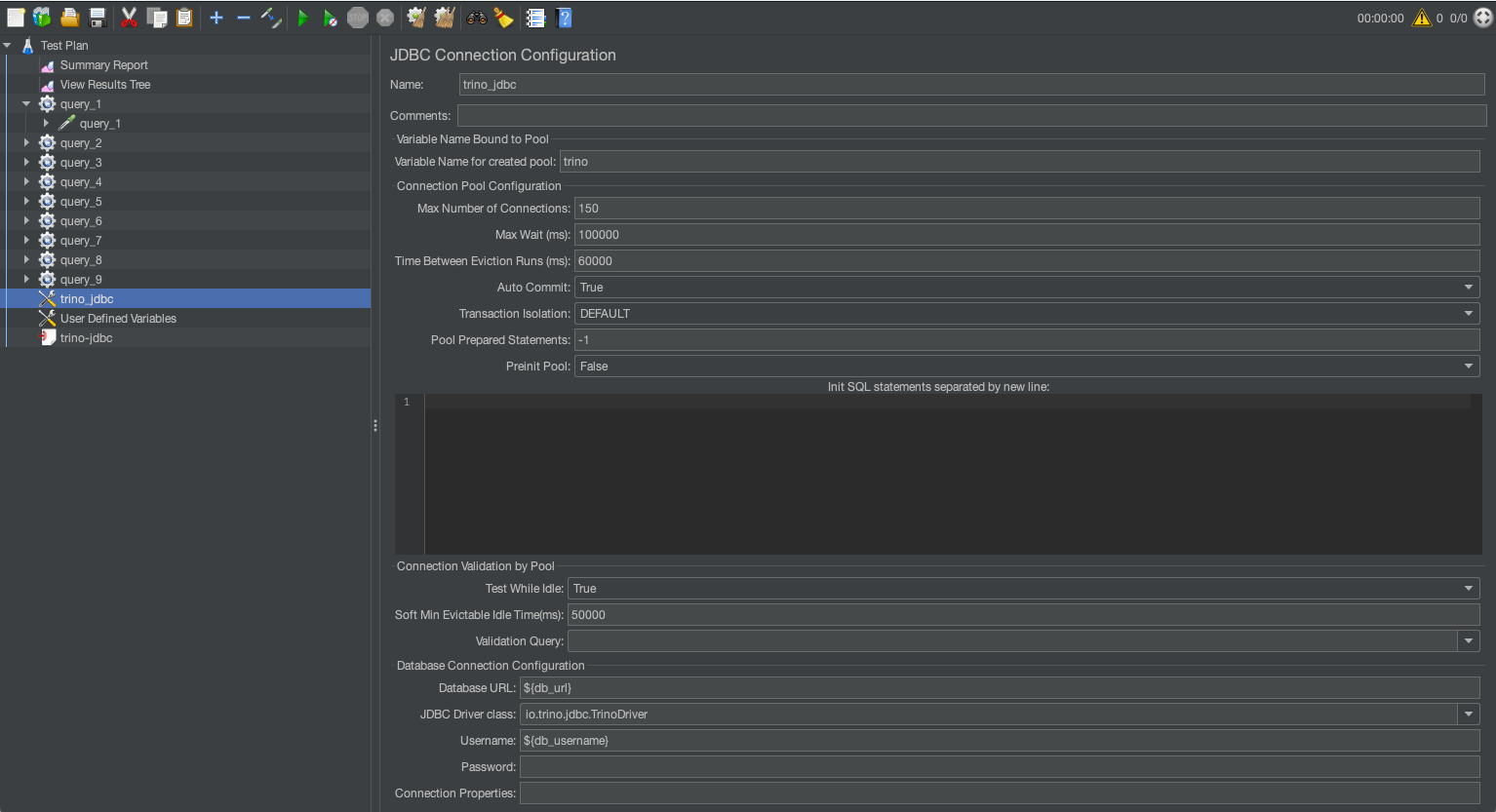
AWS has introduced a comprehensive framework designed to streamline benchmarking of SQL processing engines, addressing a critical challenge for organizations managing petabyte-scale data analytics workloads. The initiative aims to simplify the complex task of selecting the right SQL solution within AWS’s expansive ecosystem as data volumes continue growing exponentially.
The Problem AWS Is Solving
Organizations frequently encounter challenges evaluating diverse SQL engines, each with distinct architectures and optimization strategies. The sheer variety of options creates significant hurdles: creating environments that accurately reflect production scenarios, developing realistic test datasets, and replicating real-world query patterns. These difficulties intensify at petabyte scale, where precise resource management, data distribution, and robust concurrency handling become paramount.
The proposed framework, leveraging Apache JMeter, offers a structured methodology for practical, scalable performance testing. This standardized evaluation helps organizations navigate complex comparisons and make more informed technology decisions for their big data infrastructure, reducing proof-of-concept cycles from months to weeks while optimizing infrastructure costs during evaluation.
AWS’s SQL Analytics Portfolio
AWS provides a rich portfolio of SQL processing solutions tailored to various analytical needs:
Serverless query services: Amazon Athena allows interactive querying of data in Amazon S3 with automatic scaling.
Data warehousing: Amazon Redshift offers scalable, high-performance cloud options, including serverless configurations and AI-powered query assistance.
Managed open-source engines: Amazon EMR supports Apache Spark SQL and Apache Trino.
Self-managed options: Deploy engines like Apache Spark or Trino on Amazon EKS for greater control.
Modern table formats: Apache Iceberg and Delta Lake bring ACID transactions and schema evolution to data lakes.
Why Apache JMeter for SQL Benchmarking
Apache JMeter, traditionally known for web application testing, brings a powerful, extensible architecture to large-scale SQL performance testing. Its capabilities include support for multiple protocols, simulation of complex concurrent workloads, built-in performance metrics, and integration with CI/CD pipelines. This systematic methodology aims to create standardized, repeatable benchmarking processes.
Prerequisites Before You Start
Before initiating performance testing, ensure these foundational elements are in place:
- AWS account with permissions for EC2 instance management and SQL engine access
- Basic familiarity with AWS services, particularly
EC2and the SQL engines under evaluation (e.g.,Athena,Redshift,EMR) - Experience with SQL and core data analytics concepts
- Pre-configured SQL engines (reference AWS documentation for setup instructions)
- Benchmarking dataset stored in S3 buckets with encryption (
SSE-KMSorSSE-S3) and TLS for data in transit
Note: Dataset creation is not covered here. AWS provides separate guidance for generating petabyte-scale synthetic test data via EMR on EC2.
Setting Up JMeter for SQL Testing
Install Java and JMeter on your EC2 instance:
# Install Java
sudo yum update -y
sudo yum install java-17-amazon-corretto -y

# Download JMeter
wget https://downloads.apache.org//jmeter/binaries/apache-jmeter-5.6.3.tgz
tar -xvzf apache-jmeter-5.6.3.tgz
cd apache-jmeter-5.6.3/lib

# Place appropriate JDBC driver for your engine in lib folder
# Launch JMeter
./bin/jmeter
Run benchmarks in CLI mode:
# Execute benchmark tests
./jmeter -n -t <path_to>.jmx -l <local_path_for_log>.log -e -o <local_path_for>/output/
JDBC Drivers for Different SQL Engines
| SQL Engine | JDBC Driver | JDBC Driver Class |
|---|---|---|
| Trino on EMR | trino-jdbc-<version>-amzn-0.jar |
io.trino.jdbc.TrinoDriver |
| Athena | Athena JDBC 3.x driver | com.amazon.athena.jdbc.AthenaDriver |
| Amazon Redshift | Redshift JDBC driver | com.amazon.redshift.jdbc.Driver |
| Trino on EKS | Trino JDBC driver | io.trino.jdbc.TrinoDriver |
Designing Realistic Workload Simulations
The AWS framework emphasizes a comprehensive testing approach that accurately replicates real-world workload patterns. This methodology, refined through numerous customer engagements, ensures adaptability to specific organizational needs:
Query Pattern Selection: Select 8-10 representative queries mirroring production workloads, including aggregation, complex joins, string operations, and nested queries.
Data Volume Variations: Structure tests across small-scale (1-7 days of data) and large-scale (14-30 days of data) scans to assess I/O efficiency and metadata handling.
Concurrency Testing: Implement progressive concurrency testing, typically from 8 to 128 parallel queries, adjusting based on infrastructure. Include varied query complexity and frequency to simulate realistic workload distributions.
Query Weight Distribution: Incorporate weighted query distribution. For example, 60% lightweight queries, 30% analytical queries, and 10% resource-intensive queries to reflect actual usage patterns. The framework uses specific weight distributions that vary by concurrency level to simulate real-world scenarios.
Sample Test Configuration
The framework includes detailed test matrices showing how to structure your benchmarks across different dataset sizes (1, 7, 14, 30 days) and concurrency levels (8, 16, 32, 64, 128 parallel queries). Query weights adjust dynamically based on concurrency to reflect realistic usage patterns, with higher concurrency scenarios emphasizing more resource-intensive queries.
For instance, at 8 concurrent queries, all queries receive equal 11% weight. At 128 concurrent queries, the distribution shifts dramatically: lightweight queries drop to 1-4%, while complex analytical queries receive 19-22% weight to simulate production load patterns.
What This Means for Organizations
AWS’s comprehensive framework offers organizations a robust, data-driven pathway to selecting optimal SQL solutions for large-scale analytics requirements. By leveraging Apache JMeter and a refined testing methodology, businesses can effectively navigate the complex landscape of data processing technologies.
This approach significantly reduces evaluation cycles and optimizes resource investments, ensuring technology choices align precisely with business objectives in the evolving big data environment. The standardized methodology provides reproducible results that can inform critical infrastructure decisions with confidence.
Follow Hashlytics on Bluesky, LinkedIn , Telegram and X to Get Instant Updates