This isn’t just another cloud service launch. It’s a signal that the era of GPU-only AI compute is ending, at least for inference workloads where speed and efficiency matter more than raw training power.
The Problem With GPU Inference
Running AI models at scale is expensive. Enterprises face brutal economics: long server leases, massive electricity bills, and lock-in with Nvidia’s dominant hardware. A financial services firm running fraud detection across millions of transactions needs to keep that system running 24/7, which means paying for peak capacity even during slow periods.
NPUs solve this differently. They’re specialized chips designed specifically for inference, the stage where trained models generate predictions or analyze data. FuriosaAI’s Renegade delivers higher performance-per-watt than GPUs in this exact use case, cutting both operational costs and carbon footprint.
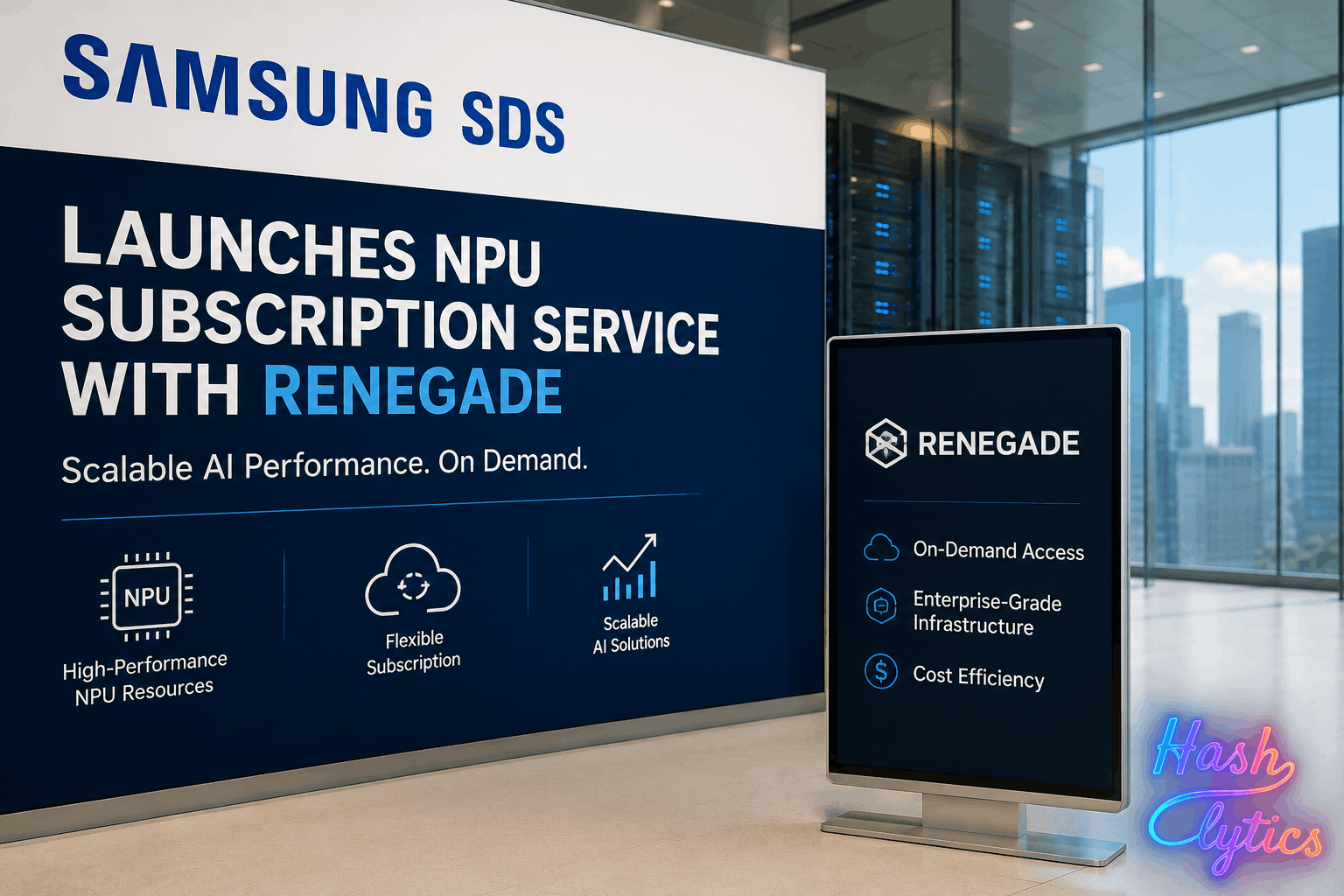
Samsung SDS‘s NPUaaS (NPU as a Service) removes the capital burden entirely. Instead of purchasing hardware, companies pay subscription fees for flexible compute. Startups testing AI features avoid massive upfront investment. Enterprises with fluctuating demand scale up or down monthly without renegotiating hardware contracts—something GPU leasing rarely permits.
Configuration Options
Samsung SDS offers four preset tiers based on inference volume and latency requirements.
| Configuration | Use Case | Example Workload |
|---|---|---|
| 1 Renegade NPU | Startup or proof-of-concept | Single recommendation engine |
| 2 Renegade NPUs | Small-scale production | Moderate document classification |
| 4 Renegade NPUs | Mid-tier enterprise | Real-time fraud detection at scale |
| 8 Renegade NPUs | High-volume inference | Large-scale model serving millions of transactions |
The flexibility matters. Customers can scale without renegotiating contracts or waiting weeks for new hardware to ship.
Why This Changes Things
The technical advantage is real, but the geopolitical angle is where this gets interesting. Public sector agencies, government contractors, and enterprises handling sensitive national data face strict compliance regimes. Many prohibit cloud infrastructure on foreign soil or reliant on foreign processors. Data residency rules kill the appeal of renting Nvidia GPUs from U.S.-based cloud providers.
By delivering Renegade NPUs within Samsung SDS’s Sovereign Cloud environment, the service eliminates that friction entirely. Lee Ho-joon, Executive Vice President of Samsung SDS’s Cloud Service Business Division, said: The launch of NPUaaS goes beyond simply introducing a new cloud product. Its significance lies in enabling customers to use high-performance AI technology more flexibly and cost-effectively.
Translation: This is both a technical upgrade and a geopolitical solution. For South Korea, it’s domestic technology winning contracts from government clients who would otherwise be forced to choose between U.S. cloud providers or nothing.
Three Immediate Wins
Switching to NPUaaS delivers clear advantages:
- Cost predictability: Monthly subscriptions replace unpredictable expense scaling tied to GPU infrastructure
- Power efficiency: Lower electricity bills and reduced environmental impact compared to GPU inference
- Speed to deployment: Access to hardware within hours instead of weeks spent provisioning traditional servers
For teams already using Samsung SDS’s cloud platform, integration is seamless. For new customers, the service functions as a complete inference stack.
What’s Still Uncertain
This launch marks the first major commercial deployment of a Korean-designed NPU in a cloud environment, breaking Nvidia’s dominance in AI compute. FuriosaAI’s Renegade has proven its technical merit. Samsung SDS’s distribution network now gives it real market reach.
But whether this catalyzes a wider shift toward domestic NPUs in Asia depends on two things Samsung hasn’t disclosed yet: transparent pricing and sustained performance benchmarks. Until those details emerge, it’s impossible to know if this is the start of genuine competition or a niche offering for sovereignty-conscious sectors.
What’s certain is this. The conversation around AI infrastructure just shifted from “Which GPU should we buy?” to “Do we actually need GPUs for inference?” That’s the victory Nvidia should worry about.
Follow Hashlytics on Bluesky, LinkedIn, Telegram and X to Get Instant Updates